
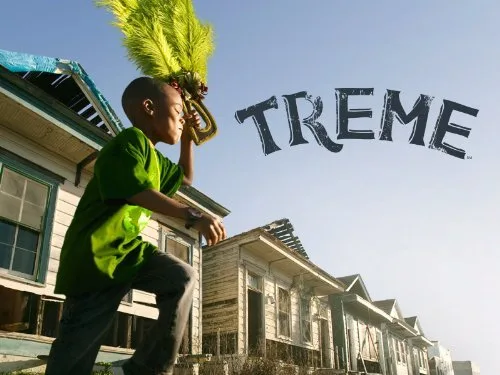
Treme is a lot of things. It’s a character-driven drama, a scathing (if not sometimes heavy-handed) sociopolitical commentary, and (quite obviously) it’s a show about music. It does all these things quite well (as we’ve come to expect from David Simon over the years), but its devotion to New Orleans music and culture is what makes Treme a completely different television experience.
The easiest thing to admire is Treme‘s dedication to music. In each hour-long episode, there is usually around 8-12 minutes of music, all of it beautifully played and filmed. It may seem cliché to have a show focus on New Orleans and its music, but the show goes to great lengths to make sure we understand how important this music is to the city. Beginning four months after Katrina strikes, the music (and musicians) of Tremé are the heartbeat of New Orleans, and quite possibly, the one thing still shining among all the rubble. Whether you are a fan of jazz or not, it’s easy to be captivated by the lengthy musical performances, choreographed so well (and featuring Simon’s trademark ‘natural sound’ techniques) it’s hard to tell what’s being played live and what’s not (something which kills musical performances on many shows). The realism of the performances add something extra to the show, providing an audible window of sorts into the thoughts and feelings of the character – and on a larger scale, the city itself.
When it comes to story, Treme is a fantastically written show, although the depth of its New Orleans knowledge can make it hard to follow the story. The dedication is appreciated, however – how many other shows on television make you want to do research? Sounds lame, I know, but the authenticity draws you in and creates a three-dimensional world you not only believe, but you feel for. That passion and focus draws directly from the unbelievably strong writing, although there are some clumsy scenes and false moments in the first few episodes. Early on, story lines and conversations almost felt like they were on rails, making sure it stopped at each destination to nail the point home. The negativity slows it down; hearing about the boarded up projects, closed public schools, insurance fraud, crime, and overall depression hanging over the city can wear on a viewer quickly (especially those unfamiliar with Simon’s uncompromising points of view).
But as the 10-episode season carries on, Simon begins to trust the viewers, expressing his ideologies in more subtle and enjoyable fashions. One particular storyline about the prison system during Katrina suffered early on from the overt criticisms and plot lines, but as the season carries on, it ends up providing one of the most darkly touching moments ever on television in the finale. Part of this credit is due to Khandi Alexander, who steals the show in a deeply moving portrayal of LaDonna, a bar owner, mother, and sister trying to get her family and life back together after the storm came in and ripped it apart. Her character deals with a lot of tragedy and frustrations, and Alexander’s barely contained desperation and stress (which culminate in her deeply moving final scene of the season) are a wonderful microcosm of the shows message: There may not be much hope under the rubble, but however small, there IS still hope.
Another highlight includes the Bernette family, specifically lawyer and mother Toni (the always fantastic Melissa Leo), along with the show’s great surprise, a somber John Goodman as husband professor Creighton. Their story is one flies across the emotional spectrum in the last few episodes of the season, yet somehow their story never feels too dark or unrealistic. Both Goodman and Leo are joys to watch, whether it’s Creighton attacking his fellow New Orleanians, or it’s Toni bailing out musicians or helping LaDonna find her brother. Finally, The Wire alums Wendell Pierce and Clarke Peters return to Tremé as trombonist Antoine Batiste and Mardi Gras Indian chief Albert Lambreaux (whose on-screen son is the talented Rob Brown), and both expand their dramatic ranges with characters who are quite different from the characters they played on “that other” HBO show.
Treme is a show we all need to watch, because it didn’t take us long (as Tremé constantly reminds us) to forget about New Orleans after Katrina, and its faithful portrayal of New Orleans and their attitudes is deep, complex, and provides a foundation for a lot of important social conversation. Unlike many mindless dramas, Treme makes you think. It strips away the glamorous lights, camera flashes and hot celebrities, and presents an unflinchingly honest reality of another dying American city (as Creighton says in one episode: “In New Orleans, we are our own worst enemies”). There aren’t many shows that have significant cultural importance, and Treme is among the best of them.