
Power. This is really what Game of Thrones is all about, and last night’s episode “What Is Dead May Never Die” explores this narrative thread beautifully, intertwining a web of different events together in similar fashion to the season 2 premiere: except this time, the connection between plot threads is a concept, not a physical omen in the sky. Game of Thrones is not just a fantasy epic about a war: it’s an exploration of philosophies, religions, and a universal question: what makes for a great leader?
Diving right into a meaty episode, “What Is Dead May Never Die” continues the wandering plots across Westeros, beginning with the shit pile Jon Snow walked into last week. It proved to be a minor one, but one which came with an important lesson from Commander Mormont: don’t fuck with your allies traditions. Much of being a strong leader is dealing with the stark brutality of Westeros (and for Snow, the world beyond the wall), and trying to fight the people that are pretty much helping them isn’t going to do anyone any good. Part of being powerful is picking your friends and enemies wisely, something Snow will need to learn if he’s going to be negotiating with the creatures of the north.
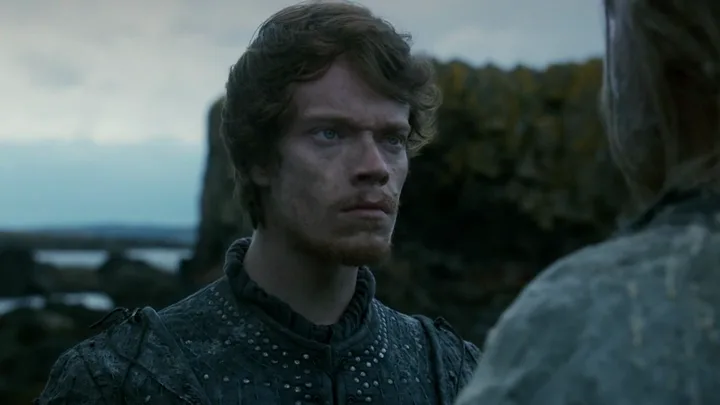
Then there’s Theon. He’s learning that loyalty must come before power, and in the cold, salty world of Pyke and the Iron Islands, that means pledging to a family that not only abandoned him, but barely even wanted him back. Like Jon Snow, Theon is a man who doesn’t really have a blood family, just a real messed up group of people he’s happy aren’t killing him. Of course, Jon Snow isn’t deserting the Night’s Watch, while Theon is quick to betray the man he bowed his knee to as King of the North a few months before. There’s a lot of pressure on Theon, but his brazen attitude about his place in the family, and serious daddy issues could have some grave consequences down the road (just ask Jamie Lannister what it’s like to change loyalties).
There’s of course the happening at King’s Landing, and the much-discussed conversation between Varys and Tyrion about power, and the chess game of politics one must play with the small council not only to rule, but to survive. We see the end of Master Pycelle, whose big mouth was well-noted in season 1, and proved again in a wonderfully filmed montage of Tyrion feeding different stories to the members of the council to weed out the blabber mouth. Tyrion’s determined not to make the same mistakes as Ned, although he’s certainly capable of making some other ones – like trusting Varys, and bringing Shae into the world of Sansa, although I’m sure he did it for a reason.
Speaking of Sansa, both the Stark girls are in equally shitty situations: Sansa has to have dinner with Cersei on a nightly basis, and Arya just watched the one person who knew her and her father get murdered by Joffrey’s men looking for Gendry. Both are living in equally tenuous positions, and both are probably realizing how much they’ve taken each other for granted (Arya especially, as she showed in her conversation with Yoren; Sansa doesn’t really have anyone to share that info with). Fantastic acting by both girls in this episode: Maisie Williams continues to amaze, and her scene with Yoren was one of the best yet of the season (although it was a big flashing light that Yoren was about to eat it, small characters in GoT only get to tell back stories when death is on the way).
Getting back to the discussions of power, the other king south of the wall, Renly, makes his first appearance of the season, along with his queen, Margaery Tyrell. She reminds him that since he’s a king, the fact he’s not interested in vagina doesn’t mean he can’t do what he needs to do to get his wife pregnant.Game of Thrones is not just a show about potential kings, but also about the women beside them, and Margaery makes it quite clear that she doesn’t need to play at games of love when there are games of power to be played first. Both her and Melisandre make fantastic parallels between Stannis and Renly, and I’m not sure who I’d rather see battle, Renly vs. Stannis, or Melisandre vs. Margaery (though I think Melisandre might have an advantage with the no-death-by-poison advantage).
There is a lot of great character development at work here, and as the smallest of events begin to take place, more pieces of the puzzle are shuffled around, slowly progressing the season time line to the climatic episodes. It’s astonishing GoT has any time to stop and explore characters or have long conversations, but its a testament to the writing team that is developing these massive books into this serialized form, and are doing so in a well-paced, thematically-structured form. It’s a tall task, but through three episodes, one the show appears well up to the task for.
Other thoughts/observations:
- Holy shit, Brienne of Tarth is a bad ass woman. Too bad she’s probably going to end up in the Rainbow Guard, feeling a bit more ladylike than even she might be accustomed to.
- who’s gonna provide laxatives to the binding stomachs of the small council with Pycelle locked away?
- getting the shaft this week: Joffrey, Daenerys, and Stannis are nowhere to be seen in “What Is Dead May Never Die.” Hopefully those dragons are getting fed, though. War just won’t be the same without them.
- speaking of dragons, someone better warn Luwin that Bran is probably not joking around about being a wolf in his head. Dismissing the presence of something supernatural in Westeros only guarantees its return.