
With HBO, the name of the game has always been ambition. Whether with genre-defining shows like The Sopranos, or commercial failures like Carnivale, HBO demands that its shows explore, entertain, and inspire us to think.
That inherent excitement attributed to HBO shows has been redefining dramatic television for the last decade, and has paved the way for networks like AMC and FX to push the boundaries of what a show can be. It’s a slight glimmer of hope amongst the Jersey Shores and Pawn Stars dominating every channel in the country today.
Now, Game of Thrones may not be the most ambitious project in HBO’s history, but if you consider the source material it’s drawn from (super long fantasy novels), it’s a daunting and unique task. Giving the show 10 episodes to captivate its audience for a second season didn’t make things any easier, and it shows early on. Moments of exposition drag out into minutes of wispy monologues about mystic events from the past, and the first three episodes of the show nearly collapse underneath the weight of it. But there is something to be said about the difficulty of stuffing 800+ pages into 10 hours of television, so Game of Thrones is not a show entered without patience.
That patience was wearing thin by the end of the third episode, a point where I think a show either wiggles into its niche and begins to grow, or quickly begins to wilt and exposes its shortcomings. I wasn’t sure where Game of Thrones was going with the story; it wasn’t clear whether it was going to be a medieval murder mystery, or a grand stage for political theater. In all honesty, I wasn’t too confident in the creative team’s ability to develop the multitudes of families and characters introduced. It’s clear early on there is a great conflict brewing, and I was afraid the impending madness would come at the expense of the characters, turning the show into a self-righteous exercise in violence.
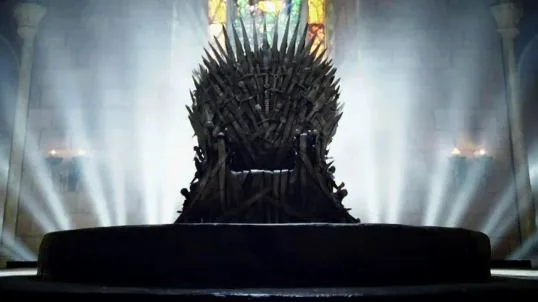
The fourth and fifth episodes, however, really begin to breathe life into the world of Westeros and the political unrest boiling under the surface. It did what the first three episodes refused to do: it revealed its hand as a show. Game of Thrones is a thoughtfully complex drama, raising questions about the struggle for power and the moral and social risks involved with wearing the woefully heavy crown. What plays out is a delicately paced chess game, where the stakes can’t be any higher. The Queen says so herself: “In the game of thrones, you either win… or you die,” and it’s a lesson a number of characters find out the hard way.
It’s a slow burn- to the point where the culmination of the first season makes the whole 10 episodes feel like a VERY informative prologue- but what drives the show is something which holds great promise.
GoT poses questions other political and legal dramas are afraid to ask: what comes of ‘good’ people? Do they make good leaders? Do evil people know how to lead better than honorable ones? It is a philosophical exploration of men in power, and those relentless and willing enough to attain it. To heavily abbreviate the plot, the story is about seven families with intertwined histories, whose unity under the one king (the protector the realm and the ruler of all 7 kingdoms, as explained by various characters). Needless to say, the throne is in flux, and many characters – some of them expecting- start to align themselves how they see necessary to attain the ultimate position of power (in addition to a season’s worth of unsettling rumors regarding an unseen entity).
These power players, combined with the families surrounding them, are a fantastic group of characters struggling to exist in an imperfect world, where nature nor the nature of men display any mercy or vulnerability. At times, there are characters which seem to propagate a number of medieval and fantasy stereotypes, but thankfully, the show didn’t gravitate towards them. Instead, as the season progressed, it made a habit of killing them, a thankful change from the cookie-cutter universes many shows and characters exist in.
This doesn’t mean the show is void of any problematic elements. Much of the violence in the show is melodramatic, although sometimes it does provide a resonantly stark reminder of the cruel realities of simpler times. Some may call it offensive or borderline masochistic at times, but it’s not a show that glamorizes violence. Every death and violent act has a ripple effect, and Game of Thrones does well in giving violent actions proper weight.
Most problematic is the polarizing feelings associated with the slew of female characters. Many of them, like Daenerys and Catelyn Stark, are fantastic. Denarys is probably the greatest story of the first season: her growth from timid pawn to powerful woman is portrayed in an Emmy-worthy performance by Emilia Clarke, and the strong writing of her story only punctuate the emotional journey she spends the first season in (not to mention her appearance in the final and arguably most important shot of the first season). But every episode of Game of Thrones has gratuitous female nudity, and many of it for seemingly pointless reasons. In fact, most of it works to counter the strengths of the show. Nudity needs to be used with a point, or it runs the risk of becoming a cheap gimmick, stripping it of its visual (and literal) power.
One scence in particular involves the fantastic Aidan Gillan (formerly Tommy Carcetti on The Wire), where his character is having a revealingly awesome monologue about power and its allure. Problem is, it’s really hard to hear it all while the prostitutes he instructed to finger each other during the conversation are screaming and moaning above it all. Totally understood the metaphor the show was trying to make (a physical manifestation of ‘stroking’ one’s ego), but it was done in a tasteless manner that leaves the viewer feeling overexposed and uncomfortable.
The first season of Game of Thrones embodies the trend of ambition HBO thrives on. It has beautiful scenery, music, and a constantly evolving cast of characters whose true goals and motivations may not be what they appear to be. It isn’t perfect, but its negatives are greatly outweighed by its positives. If you get bored by long bouts of dialogue and intricate symbolism, you will probably find the heavy-handed and bitter world of Game of Thrones hard to inhabit. But don’t let the plodding nature of the first few episodes (and occasional other moments throughout) steer you away: there is a deep and bitter socio-political study at the core of Game of Thrones, and quite a good one at that.