
Perhaps the most telling distillation of Netflix’s animated spinoff Stranger Things: Tales from ’85 comes from Brad Breeck’s riff on the original Stranger Things opening theme. As the familiar underlying synths begin pulsating, a sudden spring of bright, almost neon-y tones filter through, fluttering off a handful of harsh notes that are brash and loud in their introduction, but quickly resolved into the grimmer, almost heart-beat like sound of the original score. Stranger Things: Tales from ’85 is that theme song in creative practice, a practice in abject pointlessness shoved into the middle of a now-completed story with no apparent forethought except sheer existence, an unquenchable desire that, in this case, results in a flat, repetitive return to Hawkins.
Set in the winter between Stranger Things 2 and Stranger Things 3 (and releasing but a few months before Stranger Things‘ 10th anniversary), Stranger Things: Tales from ’85 is sandwiched between the two seasons representing the original’s most dynamic creative shift, as it moved from being a small-scale Lovecraftian horror into a massive, big-budget teen action-fantasy extravaganza. As such, Tales from ’85 tries to inspire memories of both as it tells its story, which follows the Hawkins teens (with a completely different voice cast) on a new, Upside Down-themed investigation alongside pink-haired punk newcomer Nikki, a character whose intriguing character bits are completely overshadowed by the fact nobody ever mentions her existence in the lifespan of the original series… she almost feels like a specter of sorts, even with her mother, a substitute teacher filling in for the legendary Mr. Clarke, existing as perhaps the most integral part of the animated show’s narrative.

From the beginning, the whole affair feels a bit rotten, as its first chapter opens with a quick reminder that since this takes place months before season three, there’s no room for growth or nuance with its main cast – what you know is what you get, with nothing in these ten episodes even hinting at personal growth or profundity, making the whole “solving the mystery of monsters introduced into the narrative through some piss-poor logic” story an incredibly by-the-numbers affair. The utter lack of exploration in its main cast of characters is a strange one, – though not an entirely unexpected one, as Tales from ’85 presents itself as a more sanitized, family-friendly version of Stranger Things to supposedly introduce a new audience to. a proposition that makes absolutely no sense once considering its construction, and the requirement it places on the audience to know anything about these characters in order to be invested in what’s happening. Given Tales from ’85, at no point in its ten episodes, provides any sort of reason or background on why these characters matter; they don’t even try to shoehorn an explanation of Eleven’s powers into the first episode, for example, which would seem an obvious way to try an onboard the supposed next generation of Stranger Things fans.
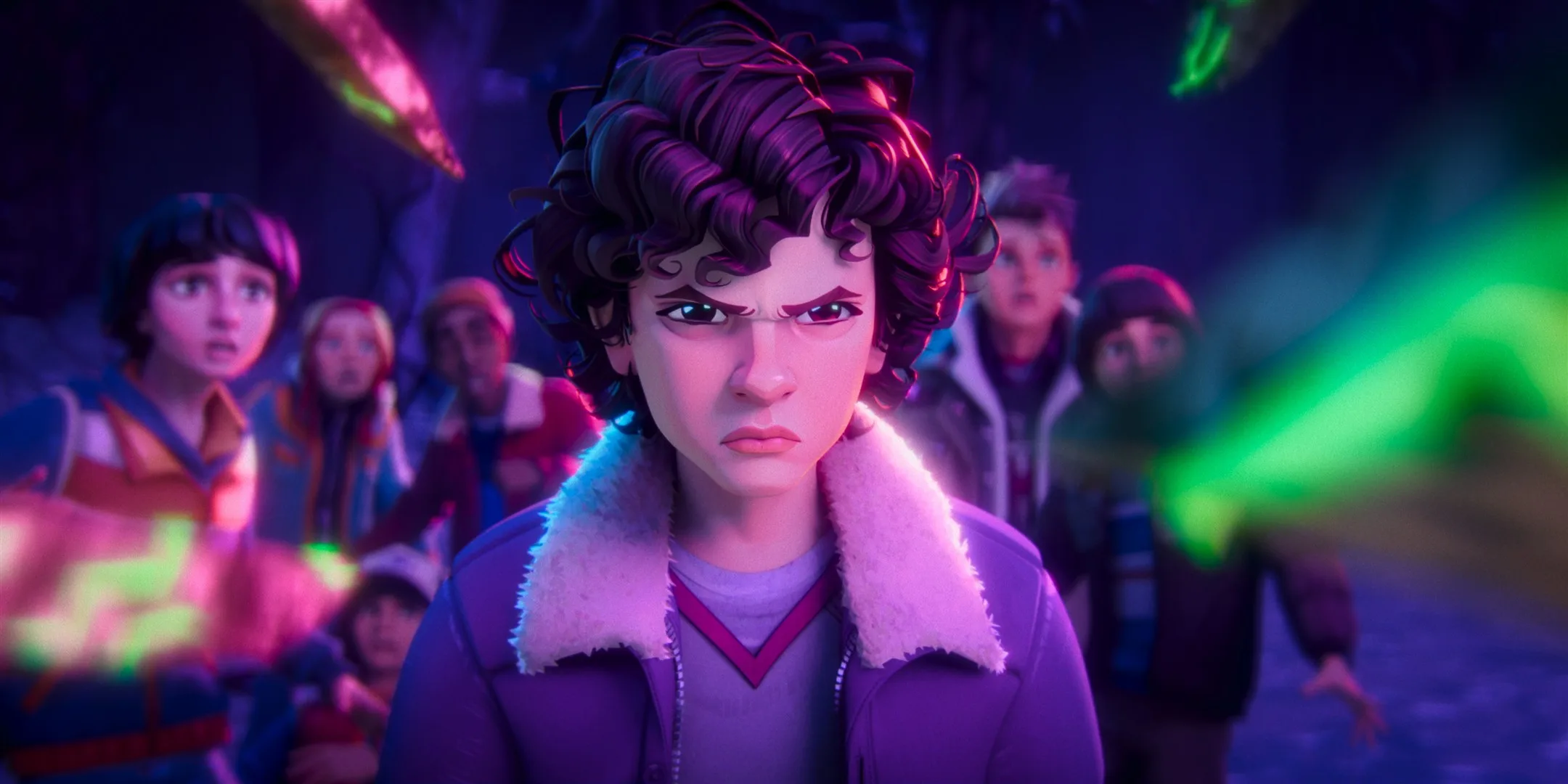
It also doesn’t help that Tales from ’85‘s visual palette also works against its goals; in trying to capture its specific pre-teen version of its characters and filter them all through the same garish, overly textured filters, Tales from ’85 looks a lot like a mix between a rejected Dreamworks film and a middling Love, Death + Robots sketch. Everybody just looks stylistically uniform, removing any of the visual texture provided by the construction of the original show’s cast; Will looks neither small or meek, Dustin looks almost exactly like Eleven (it’s weird, if you pay too much attention to it), and characters like Hopper and Max have had their unique, memorable aesthetics completely flattened and removed – which feels itself a metaphor for the soul that’s been stripped out of the show’s spirit as it flounders its way through its stilted, incredibly repetitive narrative structure. Everything else, from the monster designs to the camera work, are completely beholden to imitation; none of it is either evocative or memorable on its own, a recurring theme that leaks into every creative aspect of the show’s ten-episode run.

Simply put, everything just feels a bit off; its needle drops are sprinkled into the most random parts of action sequences and montages, episodes begin and end in the strangest parts of the ongoing narrative, every action sequence feels overextended and disjointed…. from the way it sounds to the way it looks and moves feels off, its uninspired, limited visual language and nonsensical narrative quickly turning episodes (which all run about 22-26 minutes) into weightless, eye-glazing scenes where a lot of busy things are happening on-screen simply for the sake of vanity. Strangely, Stranger Things: Tales from ’85 try at no point really tries to justify its existence, to challenge itself to explore any internal crevice within its characters, or introduce anything into the overall narrative that might not tether itself slavenly to the original material it is attached to.
Could Tales from ’85 worked better if it wasn’t a Stranger Things series at all? It’s an intriguing question, considering it as a more child-focused look into a world where kids fight off strange, unexplained horrors capturing and using human beings as power sources right before the holiday season (though strangely, nobody seems to really talk about the winter holidays or the New Year, which is as strange and disconnected as it sounds!). But even without the narrative and spiritual tethers weighing it down, there’s a soullessness to the construction and delivery of Stranger Things: Tales from ’85 that is, unfortunately, unshakeable: limited by the space it occupies, Tales from ’85 neither forges its own identity nor offers nothing to its mythology or legacy. Unfortunately, it only exists to further cheapen it by existing as a heartless, by-the-numbers recreation of the original, now-iconic live-action series, a poor introduction for new audiences – and ultimately, for those returning to the universe, nothing of substance to re-endear fans after a divisive final season and series finale.