
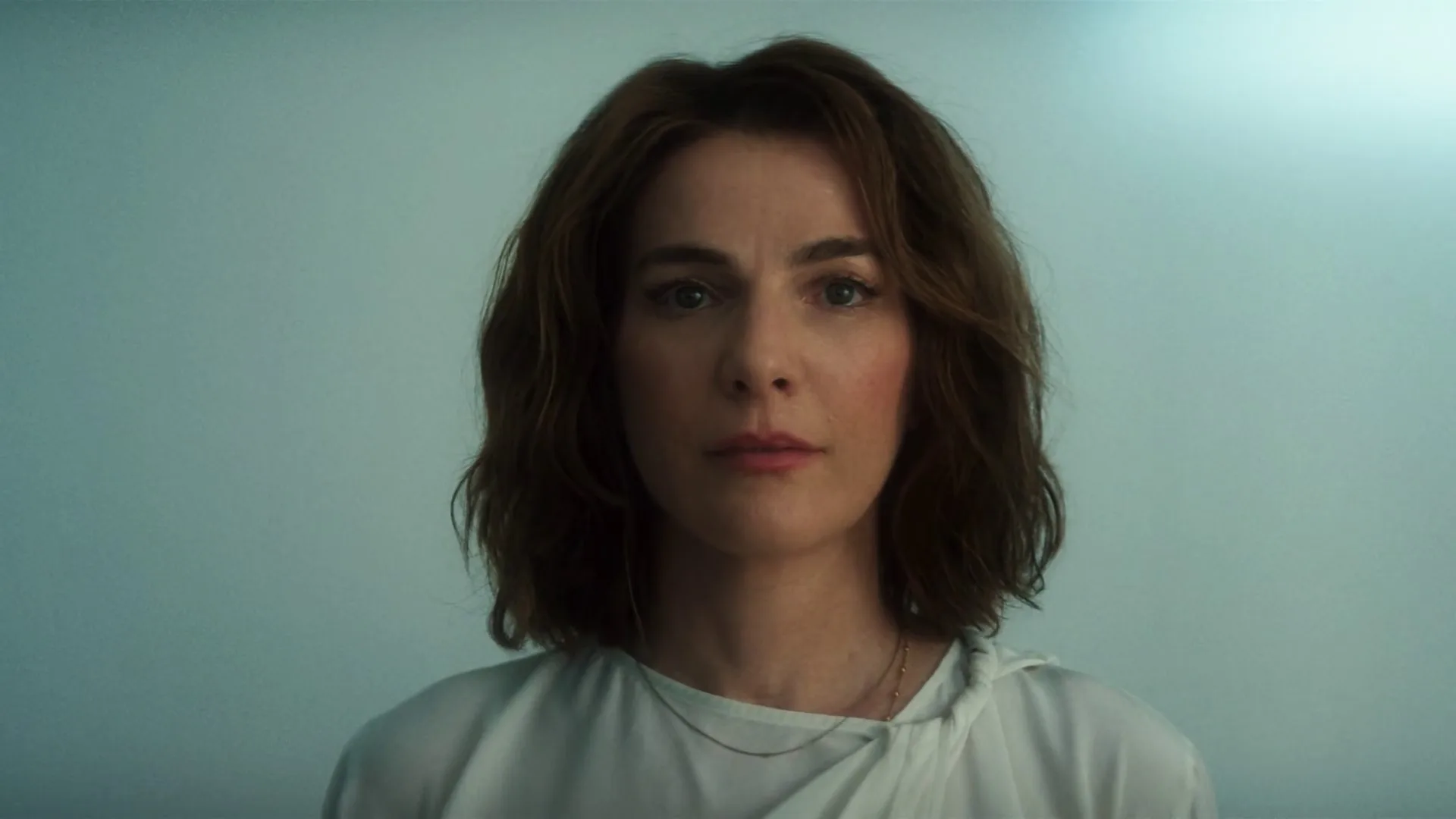
I’ve spent a lot of season two considering Daredevil: Born Again in the larger oeuvre of Daredevil‘s five seasons as a live action series. Admittedly, it is a comparison that might not be entirely fair, but one the series has increasingly burdened itself with as it tries to chart a familiar course back to its old identity, only through the lens of Disney+, the MCU – and, of course, the creative decisions of the first incarnation of Born Again, which it feels this season is trying to excise the remaining tendrils of. “The Grand Design”, Daredevil’s surprisingly contemplative, focused fifth episode, is perhaps the culmination of Daredevil: Born Again‘s fractured identities, a two-hander of sorts that focuses its attention on Matthew’s ever-prescient sense of morality – and surprisingly, Vanessa Fisk, who steps into the light of season two, just as is she is killed off to give season two some much-needed narrative momentum (though at what cost?).
Matthew and Vanessa mostly represent the two battling halves inside Daredevil: Born Again, with Matthew’s attempts to save Bullseye from dying (following the bullet he took from Vanessa in “Gloves Off”) and Vanessa’s shaky recovery from a glass shard to the brain providing the two pathways for Born Again to contend with itself. What this episode is really about, though, is Foggy Nelson, whose first real appearance since “Heaven’s Half Hour” gives Daredevil: Born Again an excuse to cosplay the series it used to be: one that was a little bit grimmer, a considerable amount more introspective – and a series with a much bigger heart than Born Again‘s ever even alluded to having, its attempts to build bridges between characters mostly based on manipulations (BB and Daniel), power dynamics – or Born Again just giving Matt someone to fuck, which increasingly feels like Karen’s only real purpose of this season.

Regardless, Matt’s half of the episode is obviously the superior one: Elden Henson falls naturally back into his role as the perpetual good angel on Matt’s shoulder, as he they take on the case of Lionel McCoy, former bully of Nelson (he called him Femboy Foggy, to be specific – doesn’t seem like a 90s kid insult, but I digress) and man clearly in a compromised position with some really terrible people. As Matt questions why Nelson would even consider taking on this case, which Nelson thinks can be resolved on a clerical technicality – which is going to get them in hot shit with their senior associate boss, no less – to which Nelson tells him “You want to go with guilt now… how about mercy?”
It’s Daredevil the original series in a fucking nutshell – and by god, filtered through Foggy Nelson’s wholeheartedly, cheesy inherent goodness, it sparks Matt’s arc in Born Again back to life, and finally finds a meaningful tether to the original series that isn’t strictly visual (Clinton Church and Rosie’s being the two most obvious examples). After spending much of the “The Grand Design” dragging Bullseye – who has resigned himself to a righteous death, now that he thinks he’s killed Vanessa to “balance out” Foggy’s killing – to Clinton Church only to be surrounded by the AVTF, Daredevil decides to leave Bullseye behind, until Foggy’s words in the episode ring through his head, and he decides that maybe the easiest path, even in the danger of darkness, is not the way.
Though this is a decision we’ve seen Matt make time and time again – with Bullseye, Fisk, Frank Castle, and even with Electra and Stick back in the early seasons – but it doesn’t make it any less palpable here, simply because it’s the first time we’ve seen how Foggy has reshaped Matt’s thinking over time, and how that really has stuck with him. When he threatens Bullseye over saying Foggy’s name partway through the episode, it feels a bit of a hollow gesture for a series that never mentions him; but after “The Grand Design” actually spends the time to give this exploration of morality a bit of profundity through arguably the best character in either Daredevil series, it rings so much truer than it has in other Born Again stories (like the White Tiger, for example).

Unfortunately, the other half of the episode is the same empty allusive posturing we’ve seen all season with Fisk, who has so much power and influence at this point there’s really nothing interesting about him outside of his love for his wife. And even that has been a bit reduced in these series, as Vanessa has slowly faded into the background since her arresting debut back in season one’s “In the Blood”; going back and watching those first few episodes with her was kind of mind-blowing. She has actual dialogue, a position in Fisk’s world that isn’t just strictly by his side or in their bedroom, and feels like a real person, rather than someone put on a pedestal by Fisk and used as pretty fodder by the Born Again writers. Her presence in this episode, which intertwines a moment before she meets Fisk (where she argues with her boss over the painting they would eventually meet under), is immediately compromised by the surprise return of Fisk’s original #2 Wesley (killed by Karen in the OG series, lest we forget) – who ends up getting more screen time in the flashbacks than expected, as him and Fisk debate the value of art over bitcoin some 18 months before the beginning of Daredevil.
Next to the resonant, emotional return of Foggy, Vanessa’s ultimate exit from Born Again in this episode is a strange one, a bunch of disconnected sequences stitched together with shots of Fisk fawning over her, sitting by her side – and then slowly getting concerned as Vanessa begins repeating herself, gets confused on what’s happening, and then drinks pineapple juice (which she is allergic to? Fisk didn’t know this?) and unceremoniously dies in the hospital. None of it really makes any sense – and though the suggestion that her final thought is spent staring at the blank canvas she says makes people reflect on the empty void of their privileged lives (seriously – Daredevil season one Vanessa is a different character) is an interesting one, one suggested lightly by earlier comments she made about leaving New York – but it is one that the series is ill-equipped to deal with in her walled-off world with Fisk, and clearly shows, as the flashbacks mostly concern themselves with bringing back Wesley to tie the two flashbacks together, and give an unnecessary reason why Fisk became interested in art in the first place (which… does anyone care?).

The third story – Daniel and Butch take a bit of a nervous, though harmless road trip – plays incredibly poorly next to Wesley’s cameo, which only points out what a facsimile of a dangerous, effective consigliere Butch has been in the first two seasons of the show. He’s good with a gun, sure, but he mostly likes to just look threateningly at people, or shoot them in the head – there’s no interior with that character, and the external performance is nowhere near as dynamic or intriguing as Toby Lenoard Moore’s in the original series, though that’s probably more a note of how the series is formed around that character (where violence is just kind of a weightless thing that happens a bunch), rather than an indictment of the character itself. Regardless, their little road trip feels like thumb-twiddling that doesn’t bring anything new to the narrative or its characters (Butch is making the same vague threats to Daniel he’s been making for a season and a half at this point, the shtick is getting old), which should absolutely not be necessary in an eight-episode season.
Although more than half of “The Grand Design” ostensibly doesn’t work, the episode at least gave us a short diversion into the past, a glimpse of what might’ve been had the series just continued and had another season or two on Netflix a decade ago. And though I’ll never defend Daredevil as a perfect series, as it was one whose greatness and profundity often came at odds with its amazing, exhausting action sequences and showy attempts at being Prestige TV (like the awesome fight scene in season one’s “Cut Man” or season three’s uneven “Karen” episode), “The Grand Design” makes it pretty clear the elements missing from Born Again, that’s made its attempts to recapture the ol’ Netflix magic feel a bit hollow and performative. If anything, “The Grand Design” offers Born Again exactly that: a blueprint to becoming a more dynamic, consistent series – unfortunately, the one-off nature of this episode (plus the fact there’s only three episodes left this season) means there’s not much time left to build on it.
Other thoughts/observations:
- Matt Murdock and feet – it’s a thing!
- Well at least there’s one less former IDF soldier on Daredevil: Born Again! And let’s be honest: Vanessa’s been more an icon than a character through Born Again, begging the question of why they’d bring back
- Remember Heather, with her Muse mask obsession and shitty attitude in the first two episodes? Where she at?
- They said the name of the episode in the episode! Gotta love it.
- “Even the best avocados have to do grunt work.”
- Fisk: “The art world. Pretension.” I miss Fisk’s old dialogue stylings.
- Oneonta and Albany mentioned in the same episode! Now we’re talking!
- Also, one of the flashback scenes that is supposed to be Matt “remembering” does not even have him in it. Odd choice.
- Not going to lie, I was not expecting an episode penned by the Tron: Ares writer to be my favorite of the season so far.
- I’m sure the deputy mayor burying a body isn’t going to come up again (no really, it probably won’t).
- Daniel’s “I didn’t fucking leak it” is definitely going to bite him in the ass.