
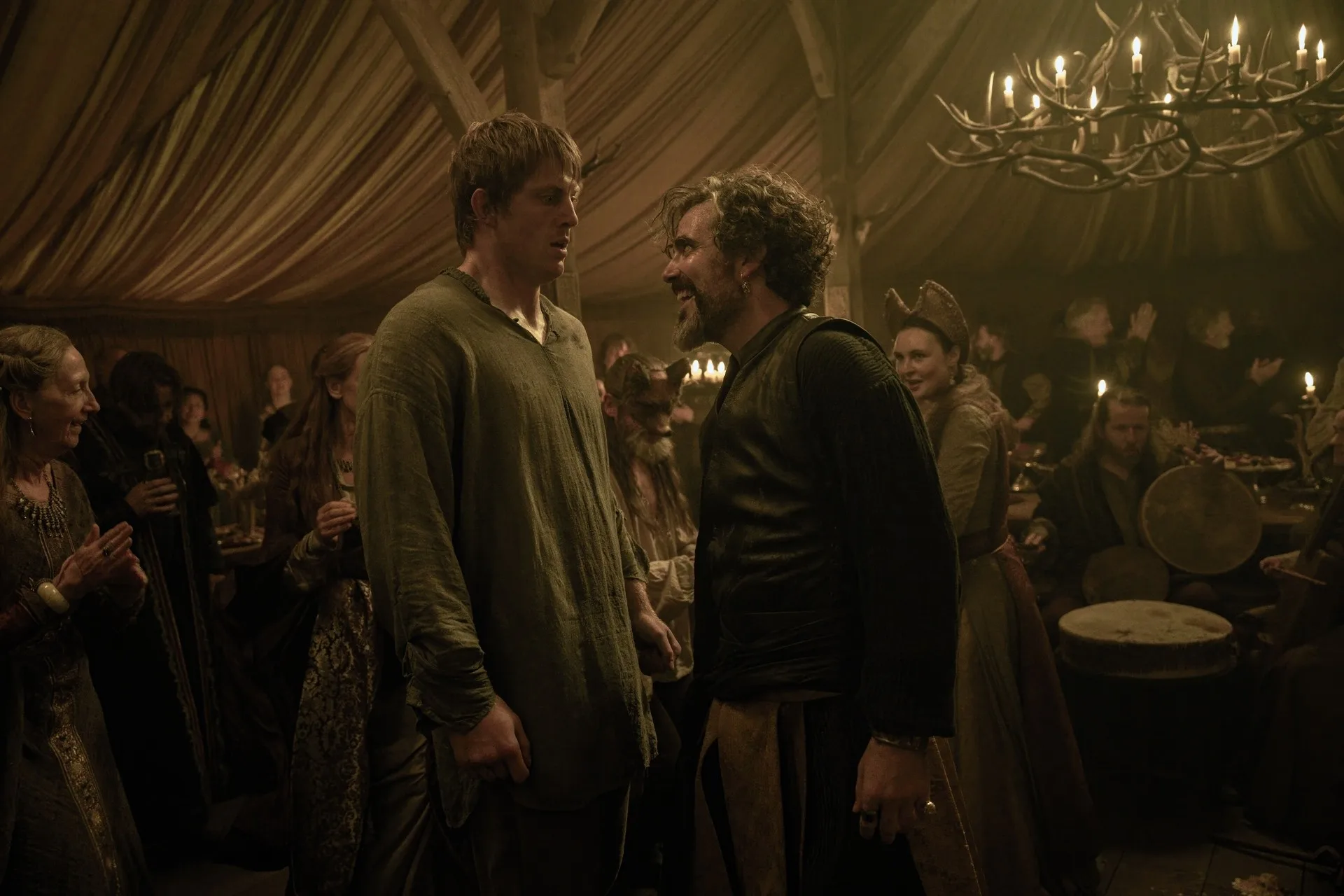
The franchise-ification of everything has become exhausting in the past few years; from the endless remakes and reboots, to the unnecessary, predictable mélange of forgettable prequels, sequels, spinoffs and reimaginings any series with mild success enjoys. There are always a few highlights, of course – Starz’s recent Spartacus: House of Ashur spinoff being the most recent, prescient example among them – but for the most part, the cynicism most of these soulless attempts at generating revenue are easy avenues for disappointment. So as the second spinoff of a series with one of the most reviled endings in television history, it would be easy to write off A Knight of the Seven Kingdoms as a weightless bit of indulgence, the last wheezing breath of a franchise that was once, but a short decade ago, one of the last shared American cultural touchstones. But for those willing to put their feelings aside – both about the end of Game of Thrones and the state of creativity in television production in general – A Knight of the Seven Kingdoms‘s first half hour is an unexpectedly pleasant, low-key affair, grounding itself in a strong lead performance, a light tone, and a smaller scale that may remove some of the gaudier visual thrills and higher stakes of the original, but nonetheless allows the sprawling Game of Thrones-iverse to recenter itself in some strong, character-focused storytelling.
“The Hedge Knight”, A Knight of the Seven Kingdom‘s assured, occasionally absurd first entry, opens itself in a somber place, as orphaned young adult Dunk buries his adoptive father, oft-forgotten hedge knight Arlen of Pennytree, in a shallow grave. As he remembers the lessons of his father (which include smacks to the head, and non-committal responses to his child expressing his dreams), Dunk predictably begins to wonder what kind of man he wants to be himself, and what kind of legacy he might want to impose on the world with his large, lumbering (and very non knight-esque) frame. The traditional Djawadi Game of Thrones swells, and then… we cut to Dunk squatting behind a tree, staring intensely at a songbird as “The Hedge Knight” cuts to a wide frame of his bare ass violently shitting into the wind.
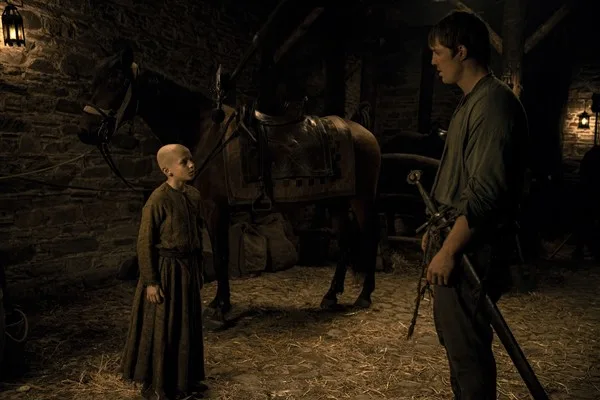
That kind of tonal dissonance is something A Knight of the Seven Kingdoms occasionally leans into in its first episode, as it tries to establish a voice different from Game of Thrones and House of the Dragon. “The Hedge Knight” follows Dunk as he travels to Ashford in hopes of entering a local knight’s tourney – despite the fact he’s not really a knight at all. In a single breath, “The Hedge Knight” offers up reflective moments levied by absurd bits of comedy, as it traces Dunk’s first steps out of his late adoptive father’s shadow and into the light, a “half man, half giant” (as he’s called by someone) who is always hungry and, as he details in the episode’s first bit of dialogue, never knows the right thing to say in any situation.
A bumbling protagonist like Dunk is a perfect fit for something trying to be a bit lighter and irreverent, the perfect vessel to project bit of pathos and humor onto as he explores the corners, both familiar and unknown, of a pre-Game of Thrones Westeros. As one might expect, he crosses paths with enough Easter eggs to pull in an enticeable audience; Ashford is set in the Reach, where Dunk spends his first night with the bawdy, intense Lyonel Baratheon – and of course, there’s an obligatory mention of King’s Landing at some point (although considering the context, which isn’t given in this episode, the mention of KL is not exactly surprising). But Dunk isn’t just a vehicle to deliver marketable bits of nostalgia; he’s a young man to his own right, trying to make sense of a world that his adoptive father didn’t really prepare him for in order to find a legacy of his own; and it’s through his attempts to asset himself in his new, forged identity that “The Hedge Knight” finds its voice and heart.
That myopic focus is really the key, both to the endearingly affable character of Dunk, as it allows us to see Ashford and its people through his eyes, allowing for a soft reintroduction back into a small corner of Westeros for those who stepped out on Game of Thrones after the (rightfully disastrous) final season, and were as non-committal about returning, as Arlan was about Dunk’s voiced desire to eventually become a night. It allows the episode to gloss over a couple odd creative choices along the way – like the very jarring, sudden cutaways that don’t quite land their attempts at humor when they appear – while firmly establishing Dunk as an interesting variation on the big, soft boy archetype we saw with characters like Hodor (or to a lesser degree, The Hound) in the original series, propelled by the familiar trappings of legacy, but unmoored from the historical weight of the families and events that took place some 90 years in the future, in the original series.
A Knight of the Seven Kingdoms may not be the universal salve bitter fans of the original series are looking for in its first episode, its lighter tone and more focused storyline bringing a more traditional, limited structure into the sprawling lands of its source material (both on screen and on the page). But it’s certainly off to a strong start, by centering itself not on the place of this new character within the familiar trappings and families of its inspiration, but in the familiar emotional journey of said awkward, giant young man, as they try to discover a path and identity of their own – a much more palatable, relatable reason to revisit Westeros than “more dragons” and “more war” and “more incest” could possibly be.
Grade: B+
Other thoughts/observations:
- Welcome to A Knight of the Seven Kingdoms reviews! After a decade of writing about the original series, I was too fatigued to take on anything related to House of the Dragon (a series which I’ve see… the two opening episodes of, and that’s all). However, with only six half-hour episodes, we’re going to dip our toes back into GoT coverage – so welcome back!
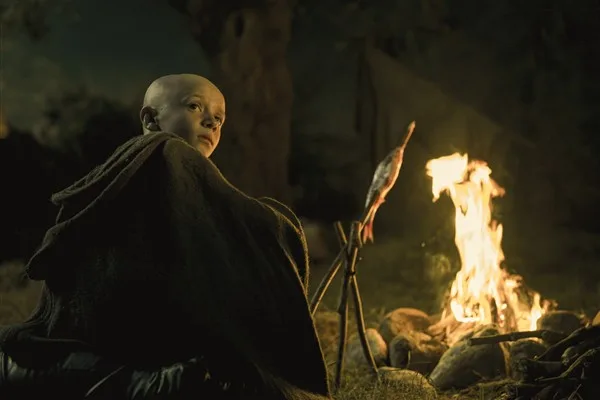
- Presumably this story is about the adventures of Dunk and Egg (the young, bald boy he meets at an inn on his way to Ashford), although Egg’s presence is minimal in the pilot episode. For good reason; it allows some space to build Dunk’s character out a bit, and allows the series to hold off some of the larger plot points that are explicitly tied to Egg’s character.
- Dunk practices a hypothetical job as part of the city watch: “stop raping, ser!”
- I won’t ruin the surprise they are clearly setting up with Egg, but… it will be interesting to see that play out, as it is the most explicit tether to the larger world of Westeros happening around this small story.
- Dunk conversing with his three horses is an adorable note.
- Dunk exchanges googly eyes with the narrator of a local stage play, which is definitely a pin being places for later episodes to pick up on.
- One of the people Dunk meets in Ashford is Raymun, a young squire being bullied incessantly by his older brother. Already love the dynamic between these two.
- “You hungry?” “Always.” Look, as 6’2″ guy myself… I get it.
- Dunk notes that a tree is “The only true pavilion a true knight needs”. While much of the pilot focuses on his attempts to join the sparring lists by talking to increasingly eccentric personalities, there is a reflective reverence for what it means to be a “true knight” that guides and informs the story I quite enjoy.