When James Gunn and Peter Safran were named the co-chairs and co-CEOs of the new DC Studios in October 2022, all was heralded that DC’s live action adaptations were headed into a new era. It offered Warner Bros. Discovery the promise of a clean break from the dual hulking monstrosities of Zack Snyder’s cinematic DC universe, and the already winding-down Arrowverse on The CW (two universes that briefly met during the Crisis on Infinite Earths crossover). The reality has not been nearly as neat as expected, from the vague distinctions made between the DCU and Elseworlds in quotes by studio executives (and the slowly forming identity crisis between them, only bound to grow with 2027’s The Batman Part II), a round of announced and subsequently abandoned projects, and a confusing, inconsistent approach to integrating, adapting, or abandoning the characters and world of the previous DCEU. Despite the initial excitement of audiences for a true “fan” to take over the DCU, the early returns have been a mixed bag; Creature Commandos‘s intriguing, brief first season debuted in December 2024 and was quickly forgotten, a niche series where Gunn’s stylistic and narrative flairs were on full display, but its tone portended a different, darker and more cynical version of the DCU that Gunn would eventually reveal that summer with his Superman film.
With Superman, Gunn’s creative vision became a lot clearer – even if the storytelling itself would almost immediately get messier. While Superman clearly understood where the heart of its story lie, its attempts to mash up different tones and comic book references often detracted from the film’s strengths. It grounded itself in a very human story of one person’s good intentions being warped and twisted by the political machines of modern humanity. It was a bit flat as a romance and more than a little weightless as an action epic, but Superman did well enough with its mix of worldbuilding (Gunn’s interpretations of Mr. Terrific, Guy Gardner, and Hawkgirl are all interesting in their own right) and its understanding of the emotional poignancy of the Superman mythos to offer a solid foundation for the new DCU to build upon – though again, it seemed counterproductive that the next DCU offering would be the second season of HBO’s Peacemaker miniseries, itself a spinoff of Gunn’s disconnected 2021 Suicide Squad reboot film (which was certainly an improvement over its own first season, but felt like another side dish being presented before the main course was ready).
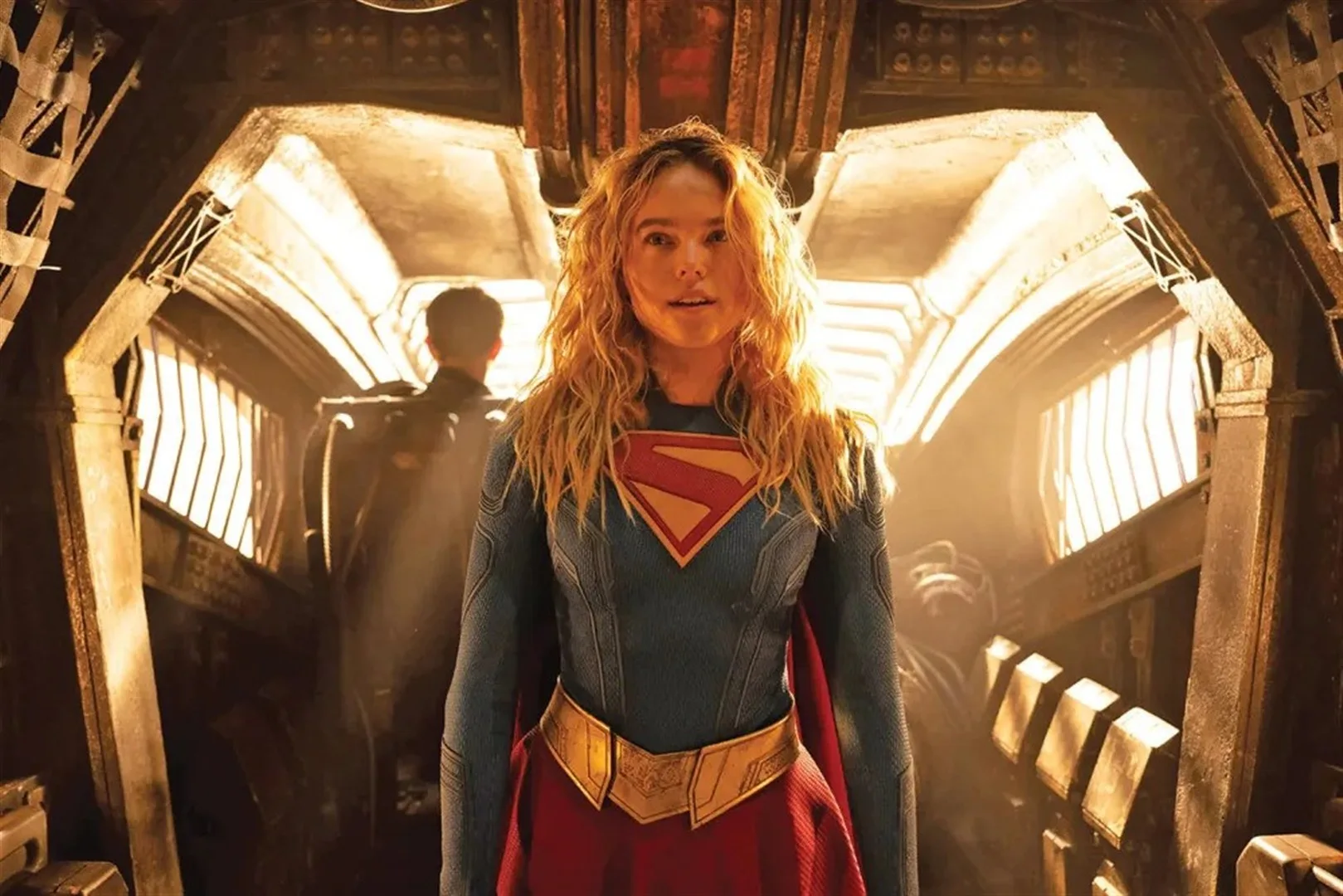
Furthering that disconnect was the lack of content from the fledling Gunn-iverse (titled Chapter One: Gods and Monsters, portending a certain level of confidence one would think Gunn would specifically try to avoid), which laid dormant from the release of Superman until Supergirl, which arrived this month – and, unfortunately, is more than a little representative of what isn’t really working so far in the disparate parts Gunn is attempting to turn into a cultural behemoth. Written by Ana Nogueira (in her first full-length screenwriting credit) and directed by I, Tonya‘s Craig Gillepsie, Supergirl is a blunt, soulless take on one of the best modern interpretations of the Supergirl mythos (Tom King’s 2021-2022 Supergirl: Woman of Tomorrow miniseries), undercutting a solid central performance with a hodgepodge script that offers a complete lack of engaging pathos for its protagonist, a handful of underwhelming action sequences, and an even more superficial, detached approach to storytelling than the distinctly light, goofy Superman film preceding it did.
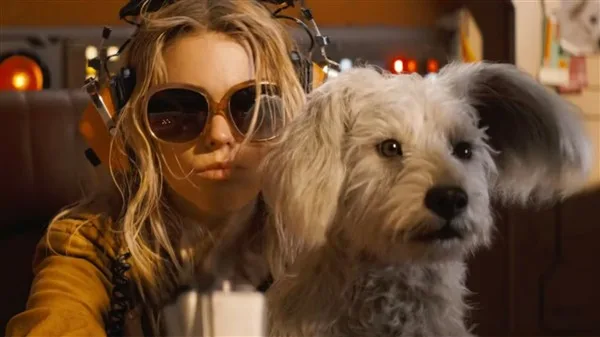
Supergirl sees Kara Zor-El (Milly Alcock, doing what she can to find a thoroughline between the film’s many disparate tones and lack of ideas) whose planet-hopping 23rd birthday bender is interrupted for a rescue mission to save a poisoned Krypto (who returns in a much smaller role after stealing the show in Superman)., the result of her being reluctantly pulled into a conflict between an orphaned child (Eve Ridley) and a group of violent space pirates. The film follows a gloomy Supergirl as she jumps planet to planet, drinking away her childhood sorrows until she’s interrupted when she reluctantly gets pulled into Ruthye Marye Knoll’s personal conquest of revenge against those who killed her parents and siblings (in a violent sequence that sticks out like a sore thumb against the much lighter, more intentionally weightless storytelling in the most of the 100-plus minutes of film surrounding it… until the ending, at least).
It is a film that doesn’t really feel like it knows what it wants to be, or have much to offer about its main character; at different times, Supergirl offers up faux, superficial post-Barbie feminism (the question “why isn’t it Superwoman” is raised, and the violent space pirates are also into sex trafficking children), brief, almost somber reflections on being an immigrant and an orphan, and odd attempts to recreate the vibes of both Star Wars cantinas and the corporate-friendly, Guardians of the Galaxy-esque depictions of ‘edginess’. Supergirl takes an interesting, if archetypal premise – sullen antihero teams up with vengeful child – and offers up absolutely nothing of interest, either in terms of how Supergirl exists as a character and person (despite not putting her into her costume until the final scene), or in how she interacts with the larger universe around her.
Supergirl is just kind of a movie that happens, a film that is thankfully short enough that it never has too long to linger on any one idea, sequence, or planet (outside of the film’s abrupt, jarring extended flashback sequence halfway through the film), but one that underwhelms at any given opportunity, especially whenever it tries to connect its external events to the nascent interiors of its hollow characters. Alcock’s Supergirl has a strong presence, but it is one unmoored from any kind of meaningful character development, or even a narrative that provides a compelling dramatic arc across its welcomely-brief 108-minute running time. Supergirl just kind of bounces from scene to scene, occasionally offering up images of Kara contending with the confluence of nihilism and humanity fueling her decisions (or at times, indecision), but never doing the emotional legwork to make her character arc, or the film’s overarching story, compelling or engaging in any kind of way.
The result is an oddly detached, weightless film, one that half-asses its way through a bunch of underwhelming action pieces (where the only instruction is seemingly “rotate the camera in ways that make everything spatially confusing and blurry”), with an insanely bland color palette, a bad score (including the worst mid-action scene needle drop of recent memory) – and an ending that screams “I’m complex!” in ways that only make its emotional and narrative shortcomings all the more obvious. Supergirl is so concerned with showing an angsty, edgy vision of its main character (the movie opens with Krypto pissing on a Superman headline) that it misses the forest for the trees – and more importantly, betrays the one-dimensional vision the universe has for this character with the uninteresting ending it gives Kara in this film, a creative decision that seemingly undercuts everything that was supposed to make Gunn’s vision of this DCU different than the Snyderverse films preceding it. Outside of lighter thematic and directorial touches, Supergirl ultimately feels more like an extension of the Snyderverse ideals than Gunn’s, a dissonance Supergirl seemingly never even recognizes.
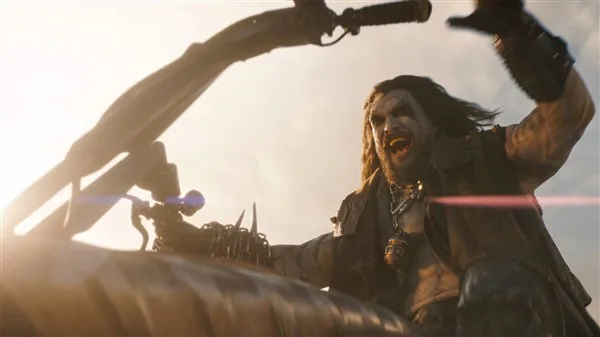
I guess if you want to see Jason Momoa grin and chew cigars as immortal bounty hunter Lobo, Supergirl at least has that for a couple scenes, though I’d argue Gunn’s insistence on shoehorning and backdooring characters unnecessarily into narratives is already becoming a bad habit, and his presence doesn’t really add anything to this film but more confusing tones. Outside of that, Supergirl doesn’t do much of anything, unable to turn its dichotomous approach of small scale story with large scale visuals into anything remotely poignant or memorable as it falls directly into the well-worn tropes of the various genres it seemingly works so hard to avoid (like avoiding a romantic interest, or making Supergirl invested in her own pursuit of goodness at any point in time). Anytime Supergirl nudges up against something uniquely challenging, it immediately backs away from it, retreating into safer, more boring storytelling waters rather than make a distinct, potentially divisive creative choice. Supergirl instead tries to be a lot of movies appeasing a lot of different people, yet manages to appeal to almost nobody along the way, because of that distinct lack of commitment to anything complex or engaging.
This was written with AI, its basically unreadable slop.
It quite obviously was not, dumbass.