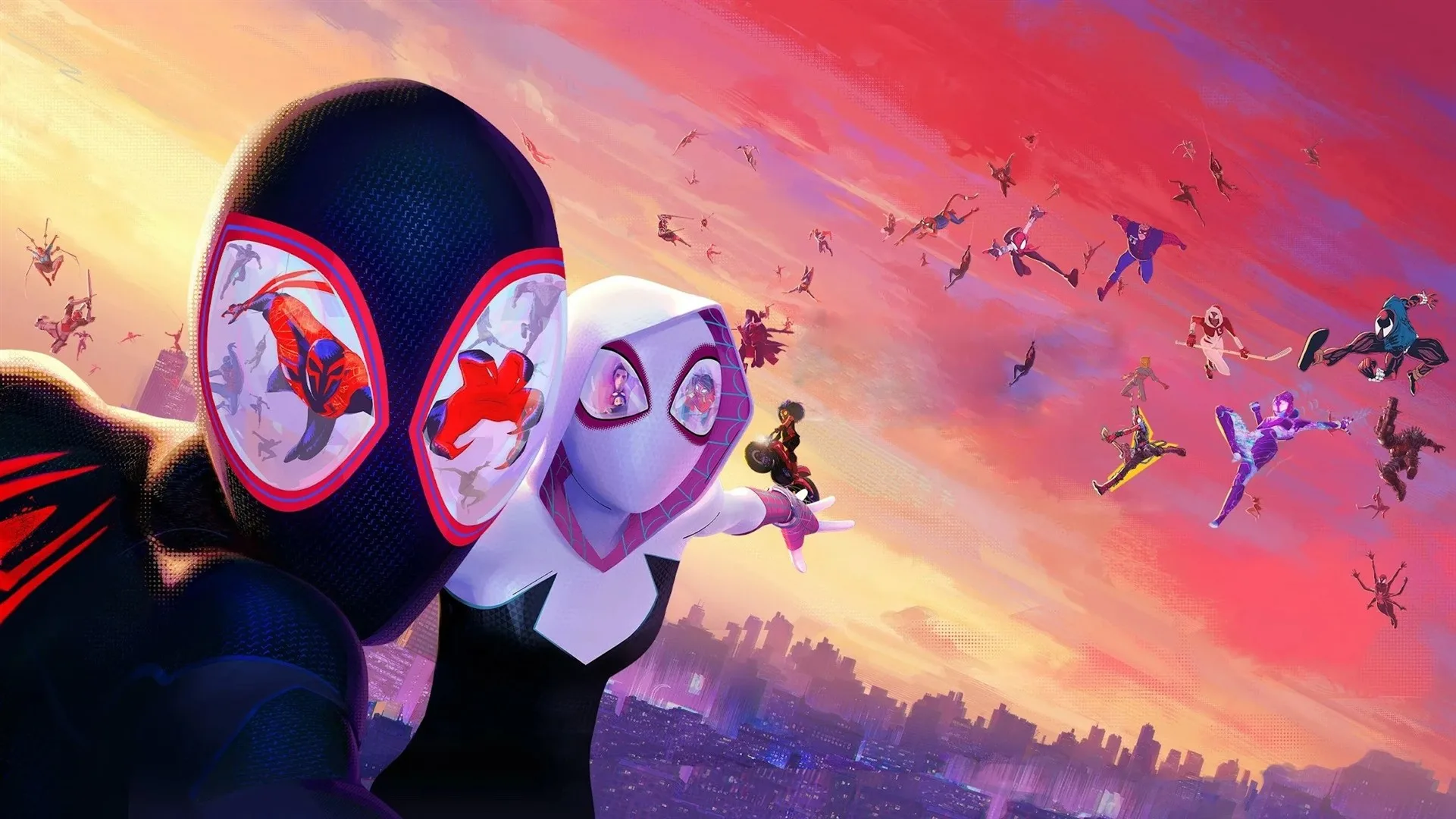
A revelation of storytelling and visual design in an increasingly stale cinematic space, Marvel and Sony Pictures’ Spider-Man: Into the Spider-Verse was one of the best films of 2018, a superhero movie with an unexpected amount of pathos and visual panache. In one stroke, writer Phil Lord reinvigorated the tired “superhero origin story” by exploring a world of family, identity – and regret, bringing a surprising emotional maturity to a story about a bunch of Spider-Men (including one literally named Peter Porker).
Spider-Man: Across the Spider-Verse, the long-awaited sequel to the series, stood to adapt perhaps the most intriguing, interesting series Marvel’s published in the past 20 years, exploring the very fabric of the multiverse through some of the most inventive reimaginings of Spider-Man’s origin story one could think of (2014-15’s Spider-Verse arc, which introduced us to Spider Gwen, among others). Similarly, Across the Spider-Verse looked to blow out the well-worn Spider mythos, exploring the foundational elements of its character through the lens of dozens, if not hundreds, of unique Spider-Men, all united by their shared sense of purpose and tragedy.
Let me see this upfront; much of Across the Spider-Verse’s 140-minute running time is an absolute blast, a maximalist version of what Into the Spider-Verse attempted to do visually and narratively. However, this is a 2.5-hour long movie distinctly made without an ending, one that stumbles through a magnanimous second act only to fall on its face with an underwhelming final “twist”, one that firmly secures Across the Spider-Verse exactly where it doesn’t belong: alongside the rest of the complex, overwhelmingly saturated Marvel Cinematic Universe, as a film built purely on intrigue for what happens next, rather than what is happening now.
What made Into the Spider-Verse such a dissonant property from the rest of Marvel’s films to that point was its storytelling; it was invested in its own growth, and also in ensuring its story had an ending. Since that time, Marvel’s strategy has changed a bit – since 2018, over a dozen Marvel-related series have premiered (… is anyone watching Secret Wars? Anyone?) and 12 feature films have been thrown at the gaping mouths of its reverent audience, each one generating a fainter cultural impact as the character count and nonsensical narrative bread crumbs balloon.
Across the Spider-Verse’s second half is a crystallized version of this, dragging audiences on an adventure with uneven emotional stakes, jarring changes in tone and visual design, and a relentless insistence that the best part of its story is just around the corner – a moment that, of course, never comes, given the already public news of the story being split out into two films (Beyond the Spider-Verse is somehow expected to release in 2024).
By the time it gets to its cliffhanger ending, however, Across the Spider-Verse really only establishes itself as a (very loud) love letter to longtime Spider-Man fans, a film packed with enough inside references and callbacks that almost feel designed to engineer dozens of subreddit threads full of grainy screenshots (I will say I did not catch the Clone High dolphin, if that was inserted in this film, like Lord’s others have).
By nature of being split into two late in production, Across the Spider-Verse makes no attempt to offer any kind of satisfaction to its narratives – Empire Strikes Back comparisons will run aplenty in conversation, but don’t buy the hype, but that fundamentally misses what makes the Darth Vader reveal so satisfying. Two films are spent building to that moment (not to be a defender of another IP The Mouse House is drowning in oversaturated, boring properties); Across the Spider-Verse just assumes anything will work to act as a bridge, since the Marvel audience has proven to be along for the ride, no matter how unearned or unsatisfying its final moments are.
The third act of the film is such an unfulfilled promise of what makes Across the Spider-Verse so interesting in its exploration of hero mythos; its only resolution is a carrot on the end of a stick, falling neatly in line with the last handful of Marvel TV shows and series, all of which appear to be designed around ensuring audiences stick around for the next exciting thing – an approach the focused, resonant structure of Into the Spider-Verse wholly rejected (even while still adhering to the “mid-credit tease” of all modern superhero films).
Is Across the Spider-Verse a bad movie? No – visually, it is the most chaotically enjoyable film since Speed Racer, and is full of small, enjoyable moments (Gwen Stacy’s scenes in particular are singularly evocative and beautiful) even non-Spidey fans can enjoy. However, it is markedly a film made for those who drink the Kool-Aid, who know the unspoken plot details and references, and are always hoping the never-ending trail of plot reaches a satisfying conclusion one day.
Beyond the Spider-Verse can certainly provide that closure; but in a sense, the damage is already done, a sequel revealing itself as just another story designed to co-exist alongside another piece of upcoming media, further building out the intricate, lifeless mosaic of endless content designed by mindless C-suites… and executed by overworked, underappreciated professionals for an increasingly shallow, equally tired audience.