To try and describe Greta Gerwig’s Barbie in simple terms is an exercise in defeatism; it’s not quite a traditional summer blockbuster, not exactly the film you’d expect based on an iconic American toy, and almost the satirical takedown of consumerism and genderism promised in the show’s long, laudatory promotional cycle. Barbie certainly does not lack for ambition in how it utilizes its $145 million budget (and script co-authored by Gerwig and partner Noam Baumbach) in bespoke manner; depending on the scene, the film operates rather efficiently as a children’s film, an existential thought piece, or naked brand advertising – however, though it is decidedly bad at nothing, it’s also not particularly great at anything, either.
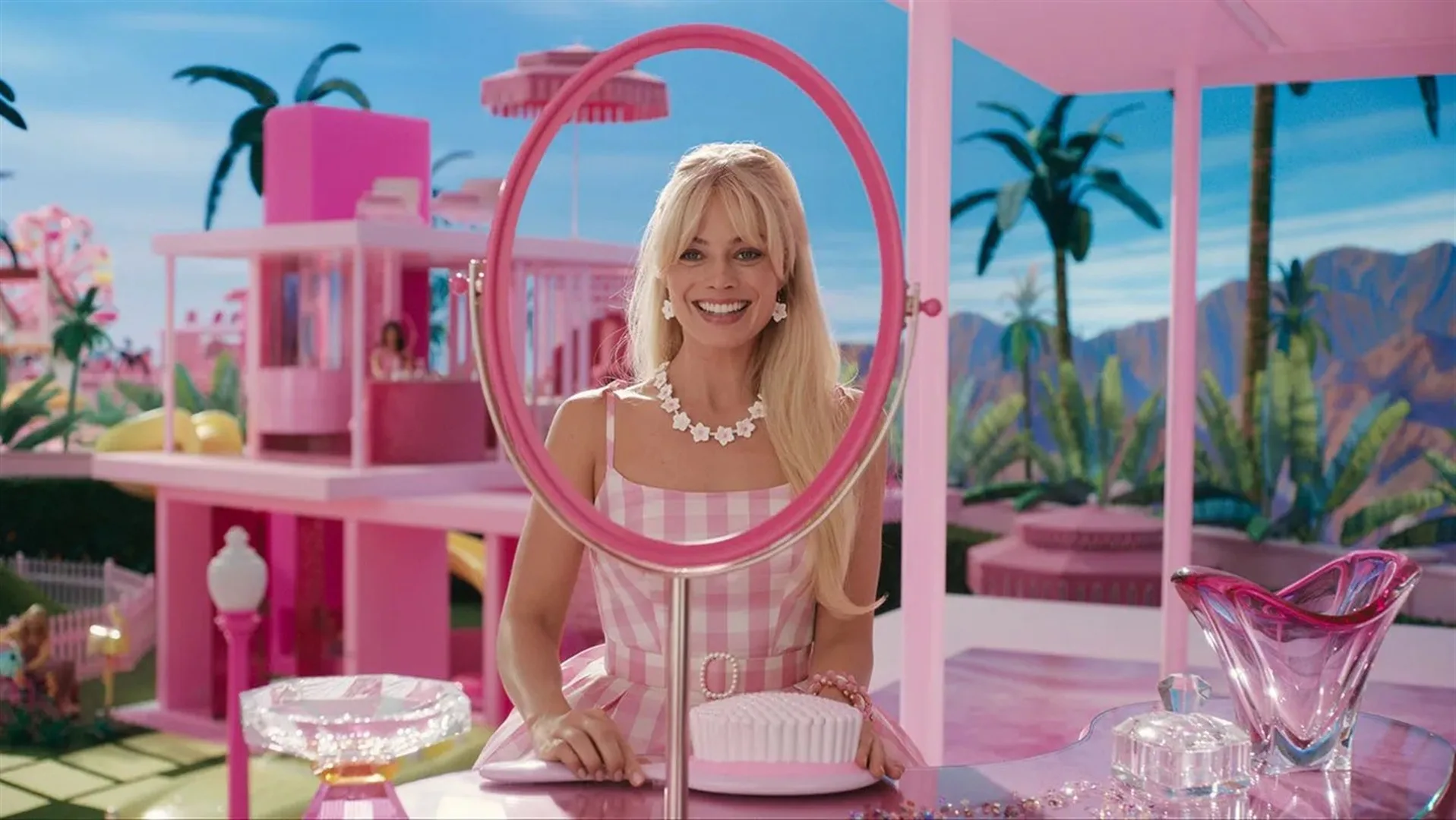
The exception, of course, is the film’s opening fifteen minutes, subverting the typical “day in the life” openings of films like Groundhog’s Day with a whimsical combination of set design, Margot Robbie’s well-tuned performance, and a careful consideration for ironic self-reflection inherent in modern cinema (where the fourth wall is about as sturdy as the Berlin Wall). It’s exactly what you’d expect – a visual and creative statement on Barbie’s inherent presence in American culture, seen through the eyes of the icon herself – and yet is delightfully catalytic, thanks to the film’s reliance on practical effects and strikingly sharp directorial choices.
From there, Barbie morphs into a strange amalgamation of films, all of which fight for prominence – much like its namesake’s many iterations fighting for shelf space and influence in a department store during holiday season.
On the surface is the Barbie film of the commercials we’ve seen for months; a “hip”, self-aware movie confident enough in its profitability proffer some mild pokes at corporate America and Barbie’s consumerist-friendly vision of feminism. This is, unexpectedly, where Barbie shines the most; in an age of tired, lifeless remakes, sequels, and reimaginings, Barbie’s ability to balance self-awareness and cogent self-reflection make for some really interesting moments – like when Robbie’s Stereotypical Barbie seeks out the advice of Weird Barbie (the one who got “played with too hard”, a phrase that rings true to the former child in all of us), or when Ken points out that he has no idea what it actually means to ‘sleep over’ at his girlfriend’s Dream House (™), since they have no genitals.
(Also, I’m going to say it here – Ryan Gosling’s performance is not as Oscar-worthy as some of the most masturbatory headlines this week would suggest. That being said, his performance will deservedly be one of 2023’s most memorable).
When the film steps out of that comfort zone, is when it runs into problems. Like any film greenlit by a toy company, there are moments in the film expressly designed to sell toys, or at least reflect on the possibility of how a scene with Teen Talk Barbie and that weird Barbie dog with the exposed butthole might eventually lead to an increase in sales – though despite Michael Cera’s endearing performance as Allan, I wouldn’t expect to see his collectible market boom anytime soon.
These moments aren’t commonplace in the film ( and surprisingly, Mattel allows some healthy amount of digs at its executive structure and business model, with some added visual nods to Dr. Strangelove to make its point), they stand out against the film’s more earnest attempts to find resolution in Barbie as a cultural concept, or poke fun at the oversaturated genre it inhabits.
More troubling is when Barbie tries to be a Gerwig film, to tap into the Venn diagram of feminism and existentialism that has defined the best works of her career, be it her performance in Frances Ha, or her work behind the lens of Lady Bird and Pretty Women. However, outside of how those familiar themes are initiated in the film (Robbie’s Barbie having thoughts of death in the middle of a massive group dance scene), Barbie uses these moments to beat audiences over the head with its messaging, with clunky self-aware dialogue, a clumsy mother-daughter subplot tasked with carrying most of the film’s emotional weight – and, at its worst, a climactic monologue whose endearing honesty is far surpassed by its preachy excesses.
For a film so confident in audiences grasping brief references to extremely obscure doll collectibles, how untrusting it is for them to grasp its themes is unsettling – and at numerous points in the film, stops its narrative and comedic momentum dead in its tracks.
Barbie is definitely a better film than anyone could’ve expected, at least on paper: one only has to look to the latest Transformers film to see how a toy license can bastardize the very concept of a movie. Barbie at least underscores the importance of that traditional story structure (and again, its amazing practical effects) as it tries to subvert it. The result is a bit incoherent (at one point, a character says “mothers stand still so their children can look back and see how far they’ve come”…. Um, what now?) – but its unbridled ambition and enthusiasm aren’t overshadowed by its few striking flaws.
Like the legacy of its namesake, Barbie is a complicated, sometimes contradictory film, one more than willing to push past its mistakes and shortcomings to try and say something with its nine-figure budget – that alone is a surprise, welcome departure from the summer blockbuster seasons of recent memory (its spiritual pairing with Oppenheimer has also brought some desperately needed excitement and energy to a mostly lethargic summer film schedule). Though nowhere near a perfect film, Barbie wears its heart and mind on its sleeve consistently through its 114-minute running time – and that is more than Kenough for a good time at the cinema in 2023.