
The Nintendo Switch’s lifecycle is a fascinating story, beginning with the wonders of Super Mario Sunshine and The Legend of Zelda: Breath of the Wild, before downshifting into years of Wii U re-releases and underperforming Pokémon games, all while announced titles like Metroid Prime 4 and Bayonetta 3 languished in development. Given all those Wii U remasters, it would be easy to forget it’s been eleven years since the last 2D Mario platforming game, and six years since the release of Super Mario Odyssey (one of the greatest games of all-time, no big deal).
Needless to say, Super Mario Bros. Wonder, available now on Switch, arrives at a crossroads for Nintendo. As rumors of their next console rumble louder with each day, and the creaky technology of the Switch lurches through demanding modern games with increasing alarmity, it’s clear Nintendo is on the precipice of a new generation – so what could a new Mario game, the first of its kind since 2012’s New Super Mario Bros. U, truly deliver after 38 years in existence?
The answer lies in the same magical creativity powering the finest games of the Switch; Super Mario Bros. Wonder is a brilliant reminder of what makes Nintendo such a unique entity in the now-enormous video gaming industry, a masterpiece of game design, programming, and aesthetic direction, that finds new found life in a thought-dead genre for the iconic mustachioed hero.
Though built on the familiar trappings of running, jumping, eating mushrooms and buttstomping Koopa Troopas, Super Mario Bros. Wonder feels like the first real innovation in 2D Mario games since Super Mario World back in 1990, drawing inspiration not only from the ingenious constructions of Odyssey’s puzzles, but the thousands of levels created over the years in the Mario Maker series – the sheer variety of levels and challenges alone speak to the creative spark at the heart of the aptly-titled Wonder.
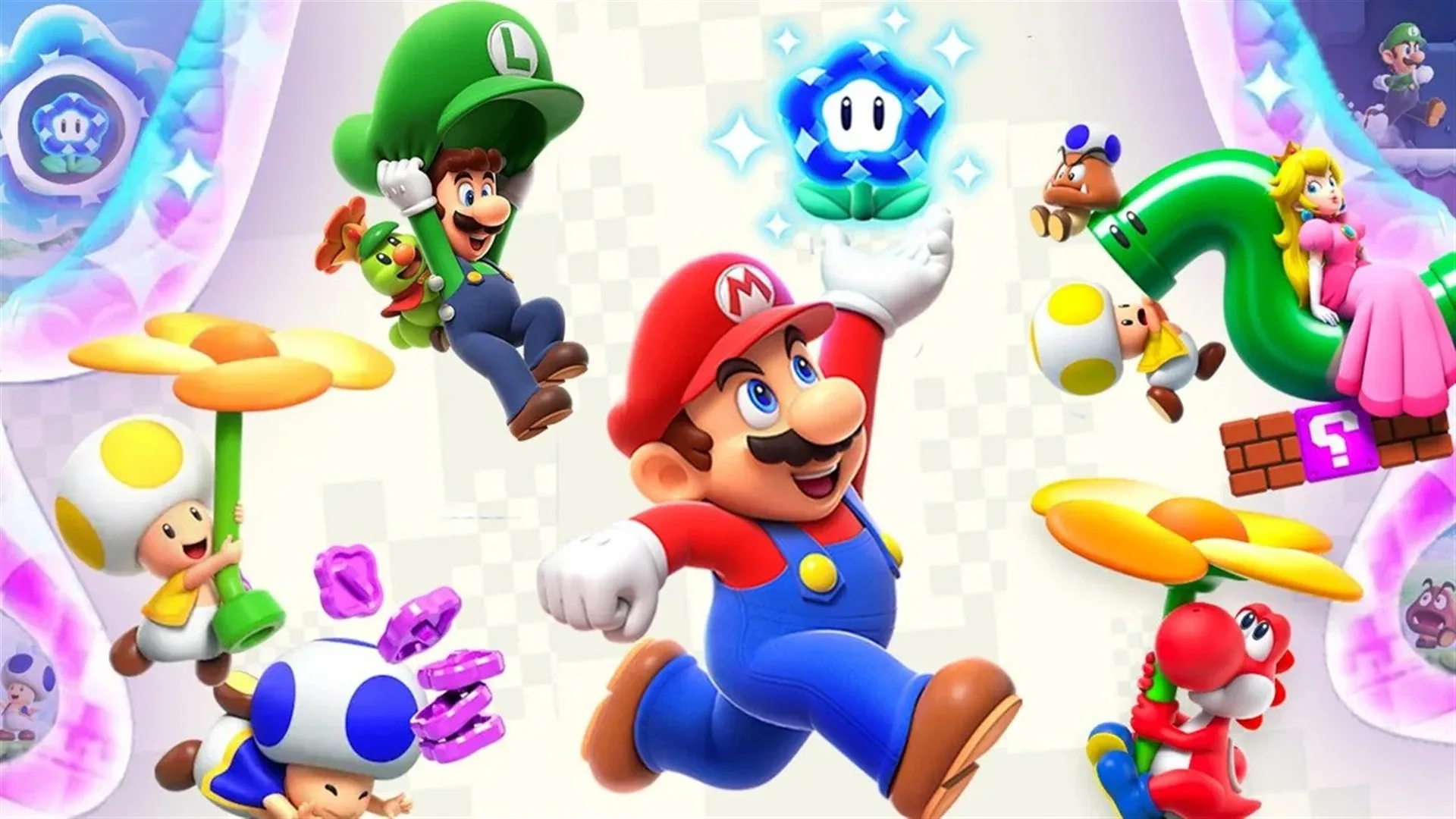
When Mario and friends are transported into the Flower Kingdom (instead of the Mushroom Kingdom – big stretch, I know), the crew set off on a search to find gold coins, purple coins – and Wonder Seeds, objects familiar to anyone who collected the Shine Sprites and Power Moons in previous Mario games. And with a new kingdom, come some new twists, primarily in the form of a few new powerful costumes (like Drill Mario, or Elephant Mario) – and the Wonder Flowers, objects which turn each of the game’s (many) dozens of levels into psychedelic experiments in game design – which, when built at the hands of the very masters of game programming, means the potential is limitless for what Wonder can deliver.
Wonder also marks a few big changes to the standard Mario formula outside its setting; gone are the in-level timers we’ve seen since the original, which transform the Mario-playing experience from one of precision and clarity into exploration and mechanical expression. The level designs are simply ingenious; whether the brief, micro-levels of the Break Time stages, or the longer, five-star difficulty Badge challenges, each level is packed to the brim with micro puzzles to solve, platforming challenges to take on, and secrets hidden in every nook and cranny for players to uncover.
It also changes how each character operates; gone are the days of Luigi’s higher jump, or Princess Peach’s special hovering ability. WIth the use of the new Badges, Mario and the other playable characters (except for the unkillable Yoshis and Nabbit) can employ all sorts of intriguing new skills, from invisibility to a parachute cap, to one that gives you coins for jumping in rhythm to the beat of each stage’s music.
These badges offer so much freedom in how to approach the game’s abundance of levels and unique, bespoke challenges: they can help make difficult stages easier or help players reach specific parts of the level unreachable with other power-ups, a little twist that adds an incredible amount of replayability to every level.
The multiplayer functions from Super Mario Bros. U have been overhauled as well; though local players (of which Wonder supports up to four) can no longer boost jump or kill each other by colliding in air, players connected online can see the ghosts of other players live on the stage, with the ability to drop “standees” as respawn points for other players to trigger in difficult places. Now, as you traverse stages, strangers can save you from inherent doom, reviving your ghost or providing a key clue to solve some of the game’s trickier puzzles – though one will never compare Mario to Dark Souls, this shared touch of community interaction makes the gaming experience a more pleasant, community one.
As perhaps the last signature new Mario title of this current generation, I couldn’t imagine a better send off for the former plumber’s strange, wonderful journey on the Nintendo Switch. It’s not an entirely perfect game (strangely enough, the music is hit or miss – and by god, they butchered the fireball sound), but it’s damn close: Super Mario Bros. Wonder is easily one of the best games of 2023, and the rare video game sequel worth the decade-long wait for its arrival.