
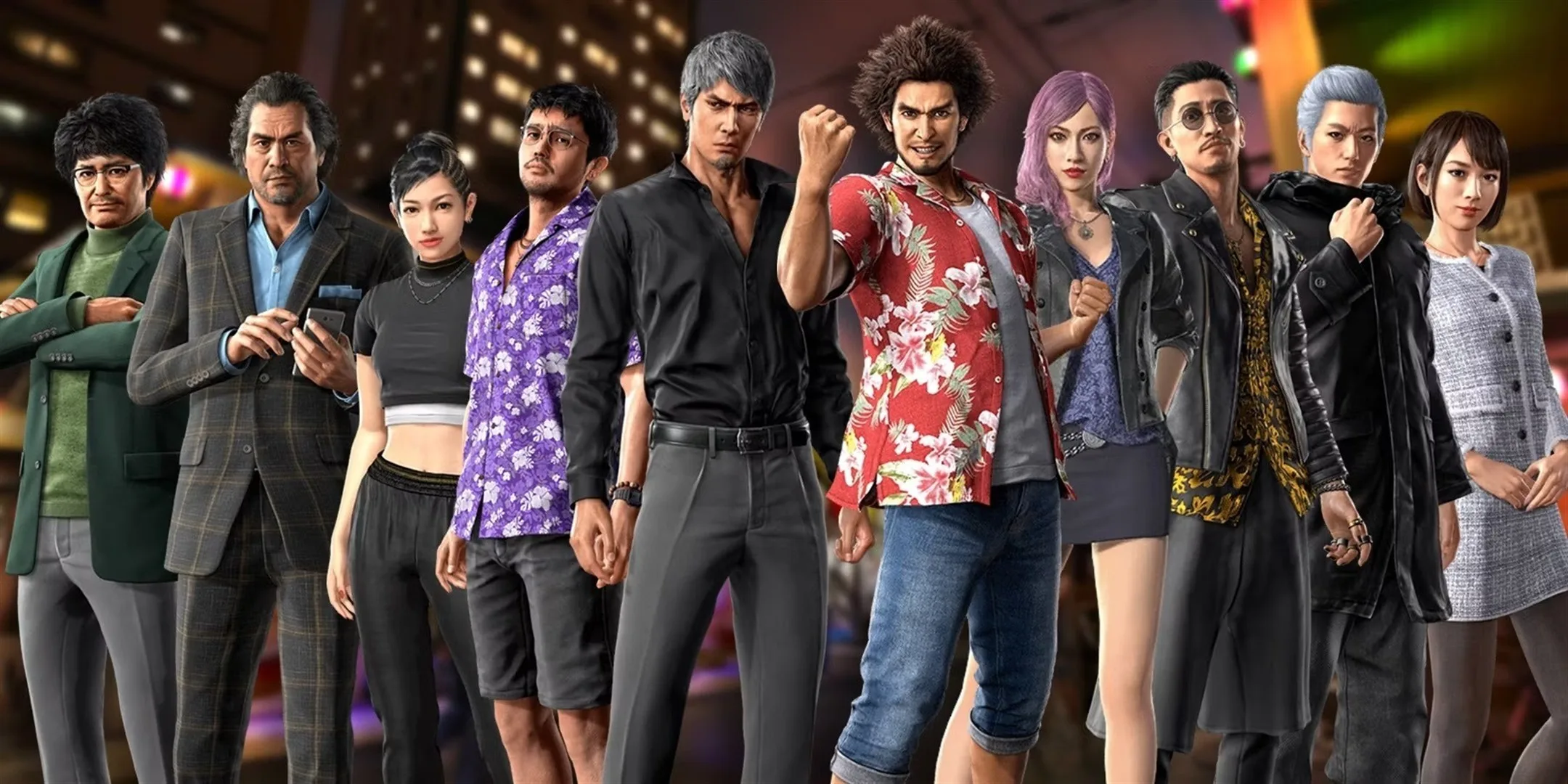
Like a Dragon: Infinite Wealth (available on PC, Playstation, and Xbox) finds Ryu Ga Gotoku Studio’s iconic franchise at a crossroads, 19 years after the first Yakuza game’s release. It also comes at a time when the studio is on one of the greatest hot streaks in video game development history, from the breakout Yakuza 0, the surprise hit Judgment, and 2023’s pair of impressive releases, Like a Dragon: Ishin! and Like a Dragon Gaiden: The Man Who Erased His Name. However, as both the sequel to the series-redefining Yakuza 7 (which transformed the series from action brawler to turn-based RPG) and the final send off for OG series protagonist Kazuma Kiryu, Like a Dragon: Infinite Wealth faces entirely different pressure to deliver something special.
Thankfully, producer Hiroyuki Sakamoto made no plans to play it safe with Infinite Wealth – which, through forty hours, is not only my favorite game of the series, but one of the best games I’ve played in the past decade. Infinite Wealth is not only a deserving followup to the ingenious Yakuza 7, expanding on all of its combat and role-playing systems in incredibly engrossing ways: it is a proper celebration of the Like a Dragon series’ quirky side stories, addictive and creative minigames, and earnest storytelling that have driven its complex web of mob intrigue and character drama for two decades.
For the first time in series history, Infinite Wealth takes the yakuza-flavored action out of Japan to its first overseas locale, when Ichiban Kasuga (who took over as mainline protagonist in Yakuza 7) travels to Hawaii to find his birth mother. After a series of mishaps and coincidences place him alongside Kazuma Kiryu, Like a Dragon: Infinite Wealth sets out to tell a compelling story about identity, legacy, and family, told through the dual lens of the Hawaii setting (with its economic dichotomies and post-colonialism scars) and back in Japan, where a cancer-stricken Kiryu puts together a bucket list of things to do before he dies.
Considering the incredibly personal nature of both stories, it may seem Infinite Wealth may be biting off more than it can chew – after all, who has time for Virtua Fighter 3tb, karaoke, and Mahjong, with such dramatic character-driven stories driving the narrative? The answer is, of course, the classic Yakuza sauce, which grounds its stories of government corruption, societal reflections, and character-focused stories with infectious silliness – which in Infinite Wealth, manifests in the incredibly gameplay, lying outside the game’s dozens of hours of cutscenes, dialogue, and exposition driving the main story (or in the case of Kiryu’s narrative, a walk through Yakuza’s past that is as heartwarming and poignant as anything I’ve seen from a long-running game series).
Aside from its storytelling, the Like a Dragon series is known for two things: engaging combat and an extensive set of entertaining minigames. The former first; Infinite Wealth’s turn-based combat, which has evolved to include positioning, environmental elements, and an expanded tag team attack system, is one of the best I’ve ever played in an RPG. Rather than the stilted, animation-heavy fights of Yakuza 7, Infinite Wealth takes a much lighter, quicker approach to its combat, focusing more on physical interaction and positioning than the previous game (where too much combat relied on complete luck with some area-of-effect attacks); this not only makes battles more kinetic, but more engaging, each fight presenting unique opportunities to approach combat situations, forcing players to engage with a much wider variety of strategies and abilities to defeat tough enemies. The job system, which I’ve barely touched in my time so far, also sees a lot of expansion, with new classes and abilities that add further dynamism to Infinite Wealth’s already-addictive battle system.
And why, might one ask, have I been unable to fully explore some of Infinite Wealth’s fun new jobs and special abilities? It’s the aforementioned minigames, of course: like every game in the series before it, Infinite Wealth takes the best of its minigames (darts, arcade games, karaoke, etc.) and refines them all once again to ensure dozens of hours are lost playing obscure Japanese card games and traditional Like a Dragon minigames.
Infinite Wealth takes this a step further, replacing the business management sim of the previous game with four minigames that feel like entire spinoff games of their own. Two of these, the Pokemon-like Sujimon Battle, and Happy Resort Dondoko Island (think Yakuza Animal Crossing), are more fun on their own than most games I played in 2023, modes with incredible amounts of depth and replayability, games nearly worthy of being full-priced titles of their own – the fact they are mere additions to the already-perfected world and content of the series only speaks to the quality of refined gameplay (and occasionally, wonderfully unhinged storytelling) this series can offer.
Players are bound to lose dozens of hours amongst Infinite Wealth’s intriguing story and incredible array of additional content – it’s the most playable (and recommendable) entry in the series, one that is equally amusing and emotional as it looks forward to the future of the franchise (and quite honestly, the world), and honors what came before it, in what is immediately one of video game’s most iconic sendoffs. Like a Dragon: Infinite Wealth is nothing short of a masterpiece, a feast of storytelling, gameplay design, and aesthetics, a celebration of traditional game design and exploration of modern existence that firmly cements the series as one of gaming’s greats.