
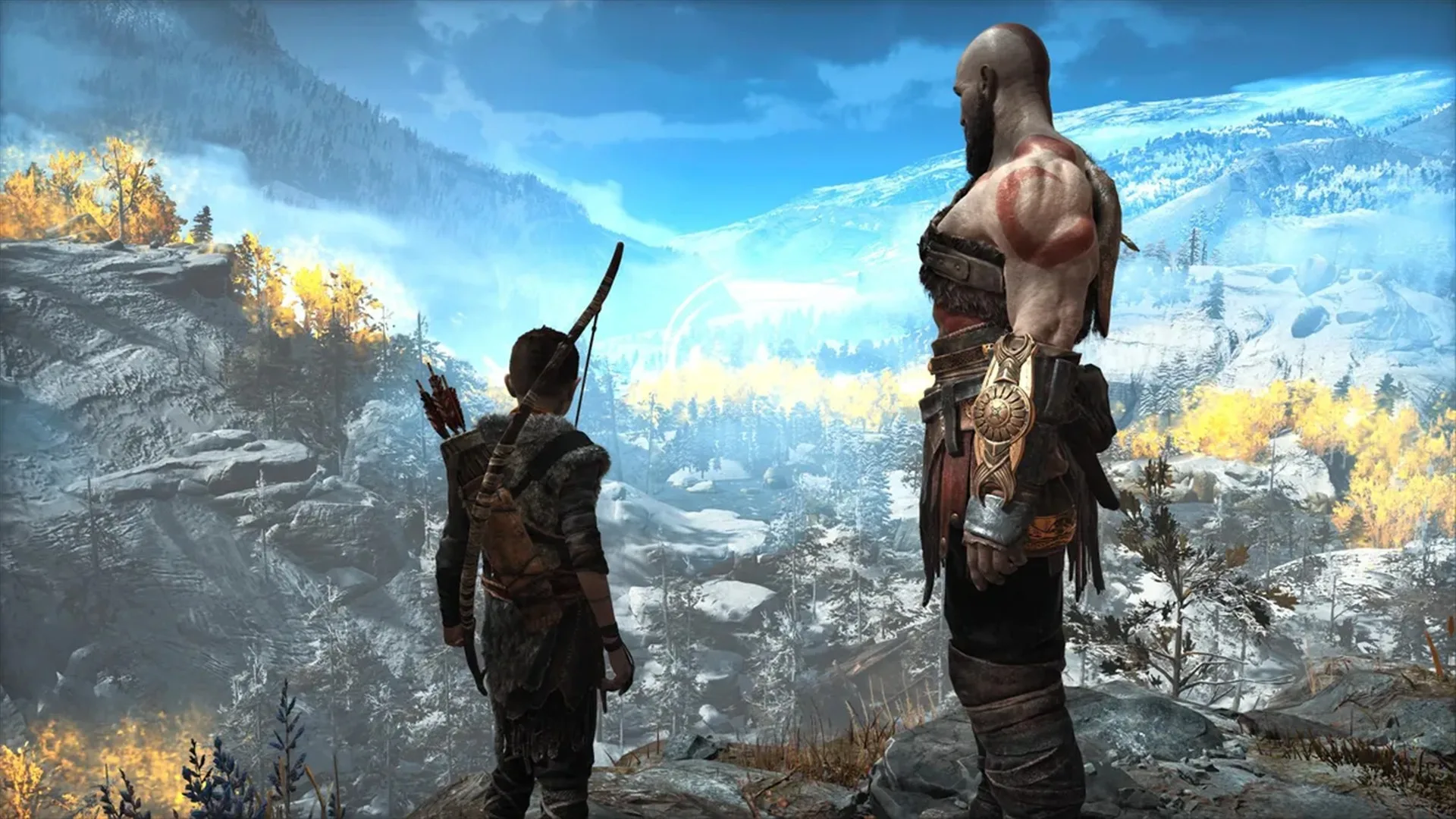
In many ways, Sony’s God of War series feels like a gaming relic, a symbol of a hyper masculine era of action protagonists from the turn of the century. A violent tale of vengeance pitting a demigod against the giants of Greek mythology, God of War‘s main character Kratos was the super muscled, raging icon of male angst. Technically ambitious, Shakespearean in scope, God of War always felt inches away from being a great series, eventually devolving into bloodstained madness as the series continued on past its prime, both in terms of its game play elements, and its epic, though ultimately superficial, narrative (though the main plot takes place across three games, there were a total of seven games set in the Greek world between 2005 and 2013).
When Sony announced God of War would be returning, and no longer set in the world of Mt. Olympus, the announcement was met equally with anticipation and frustration. The return of original series director Cory Barlog also seemed a gift and the curse: while setting the new game in the world of Norse mythology (you know, Thor, Loki, Baldr, Odin… all that good stuff) opened the door for plenty of new storytelling opportunities, would those all just be in service of another empty tale of vengeance and blood lust? It seemed below Sony, who’d shown their chops in abandoning the standard testosterone narratives for new stories like The Last of Us, Uncharted 4 (plus it’s sequel, The Lost Legacy), and Horizon: Zero Dawn.
In the time between Kratos’s heyday on the PS3 and 2018, the game industry went through a major generational turnover – and with that, those already entrenched in the industry grew up. It’s been 13 years since Kratos made his twin-blade slinging, god-killing debut on the Playstation 2; games not only play differently (and look a whole lot nicer), but the narrative expectations of a major AAA game are much different. How would Cory Balrog and the 300+ people working on this God of War be able to recapture the magic, without feeling like a complete retread of gaming’s past?
The answer is in the timeline itself; the developers of God of War have grown up, and this game is a major reflection of that maturity, in every creative and technical aspect imaginable. Rather than a story about revenge or murder, God of War tells a story of self-realization – and perhaps more importantly, grief. Set amongst the world of Midgard, God of War finds an older, more despondent Kratos living out his life in a small cabin, away from the wars of the cruel gods of any realm with his wife and son. When his wife passes, however, Kratos finds himself ward to a son he barely knows, aware of the responsibility he has to raise the boy, and what that means, knowing his son Atreus is the son of a god, and therefore heir to the life of pain, suffering, and blood Kratos has lived.
In doing so, Santa Monica Studio has delivered arguably the best single-player game so far in this generation of gaming: God of War, despite a few flaws around the edges, is a breathtaking experience, both in its technical mastery (and beauty; on a Playstation 4 Pro running at 4K , this is the best looking game I’ve played on the console) and its narrative ambition. God of War is the reflection of a game industry as it matures into adulthood, and all that comes with that realization: coming to terms with one’s failures, learning to deal with the everlasting pangs of grief that come from inevitable loss; and most importantly, finding a way to channel one’s failures, hopes, and most cherished values onto another human being, one whose very life and soul you fight to protect everyday. God of War is a game about fatherhood, and one of the more powerful virtual depictions to find its way to a console.
Of course, there’s plenty of bombast to God of War; God of War also semi-reinvents its combat, in a way that is doubly satisfying: it is an absolute blast to play (think Dark Souls mixed with Batman combat, with an axe that behaves like Thor’s hammer), and it matches the narrative weight with the same feeling of consequence and decisiveness. If the old button-mashing combat of God of War past served as a parallel to the thin, skull-rattling characterizations, this God of War‘s tactical axe-swinging and fist fighting serves as a proxy for the game’s heavy, brutal storytelling.
For about 30-35 hours (nearly three times the length of God of War III, by comparison), God of War follows Kratos and Atreus’s adventures to the highest mountain in the nine realms without cutting the camera away once – an intense decision that complicates the game on just about every level (I cannot imagine what a nightmare that must’ve been to program – shout out to all the developers on this game who crunched for months to make the game this seamless). The focus is never off Kratos, the camera ever present behind his shoulder as he fights ogres, climbs frozen cliffs – and most importantly, observes his son learning the world of pain and gore Kratos tried so hard to leave behind.
While that intense focus is ultimately a major component of what makes this game click, it does come with its shortcomings; perhaps the most important character of the story (no spoilers, I promise) is never actually given a voice at any point, a vehicle for the stories of Kratos and Atreus than a three-dimensional entity in their own right. This is by design, of course; without that absence, there’s no structure for Kratos’s reluctant journey through the realms. It doesn’t make it any less frustrating, however – and though it isn’t a major blemish, certainly represents a critical missed opportunity for even deeper explorations of the dynamic relationship between father, mother, son, and destiny.
At its absolute core, God of War is the same game it ever was: Kratos smashing in the face of screaming mythical creatures, solving puzzles and opening treasure (always with a satisfying grunt, of course). But this time around, God of War feels like the rare example of a gaming franchise growing up, maturing both its storytelling concepts and its technical design into a much more cohesive, emotionally engaging gaming experience. God of War is perhaps the finest game of the generation, a cinematic, resonant tale of loss and fatherhood, that finds harmony between its narrative and technical ambitions in ways rarely seen in modern gaming.