
In 1980, software developers Michael Toy and Glen Wichman released the game Rogue as a free executable piece of software for Unix systems. Featuring a player-character exploring multi-floored dungeons, the hook of the game was in its challenge; die during turn-based combat or running into a trap, and the character was permanently dead, forcing players to start from scratch each time. Sounds challenging, sure, but they weren’t done there; designing the game to have procedurally generated dungeons, items, and encounters ensured each attempt into the dangerous castle was different and completely unpredictable.
Little did the two college students know, but they’d be introducing a number of mechanics dominating the games industry for the next 40 years; procedural generation drives games like No Man’s Sky and Spelunky, perma-death is featured in the Dark Souls and XCOM series, and vaguely fantasy-driven narratives and world design are… well, everywhere, in the post-Game of Thrones world (and during a resurrection of Dungeons & Dragons in the mainstream). Inside the little ASCII art of their Unix software, Michael and Glen (along with Ken Arnold later on), had created their own sub-genre of game, what’s now referred to as “rogue-like” in one of gaming nomenclature’s most honorable homages.
By 2020, the rogue-like has reached its saturation point; one of the downfalls of becoming the darling genre of independent game development, is too many people were making rogue-likes. Just this month alone, Spelunky 2 and Rogue Legacy 2 launched, iterations on already-refined formulas that, while still offering the same entertaining run-based gameplay loop (albeit with some tweaks to the whole ‘permadeath’ situation, like stat bonuses and upgrades that carry over between runs), didn’t exactly feel like necessary additions to the crowded genre.
And then Supergiant Games released Hades – which is not only the best rogue-like of the past decade, but perhaps the single best game of 2020 (we’ll see what Cyberpunk 2077 has to say before the year is out, of course). Everyone knew the developers of Bastion and Transistor had something special on their hands when the beta version of the game launched in early access on PC in late 2018 – but my god, were we not prepared for the Greek-mythology laden greatness that is Hades, a game that deconstructs the rogue-like genre itself, proving that narrative complexity doesn’t have to be sacrificed, simply because of an inherent game design feature like death.
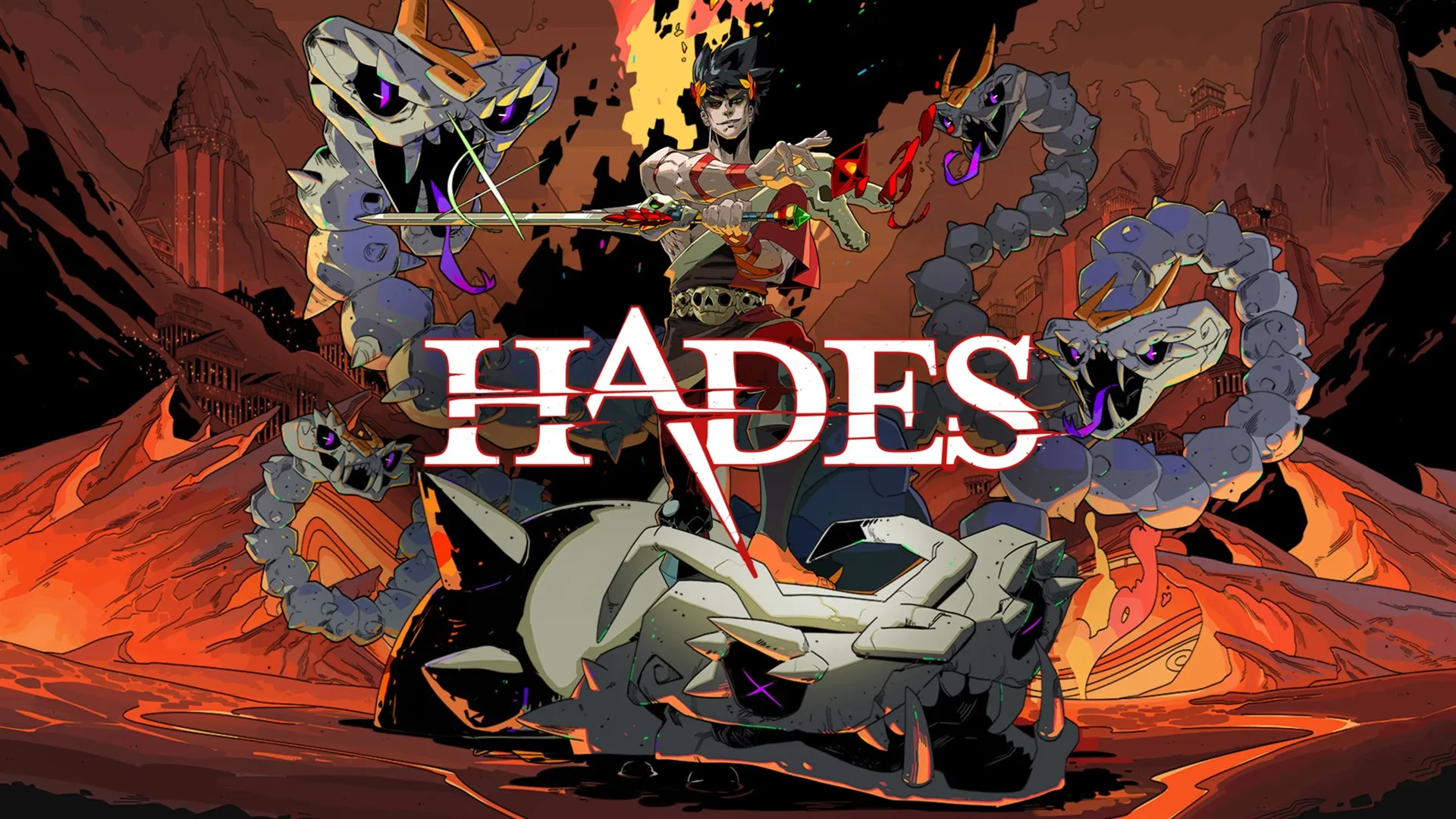
The skeleton of Hades is familiar to Rogue fans; players control Zagreus, son of Hades, as he attempts to leave the underworld to meet his mother Persephone, and the rest of his deity-laden family. That journey is an arduous one through a labyrinth of settings, enemies, and encounters, challenging players’ reflexes with dynamic, fast-paced combat, some incredible weapon and player movement mechanics – and of course, more style and personality than most games would know what to do with.
The devil, of course, is in the details (for most of the game, Hades sits at his desk doing paperwork, to further this point); as players run and die and run again, the world around Zagreus changes. He meets more gods, more creatures doomed to the afterlife (including poor Achilles and Sisyphus, among many others) and forms relationships with them, that change or shift depending on what other things players have done in the game.
It completely changes the way the “rogue-like” genre flows from beginning to end; rather than a a series of 30-45 minute “runs” that wipe the deck each time, Zagreus and his cursed brethren are doomed to repeat their Hell, over and over and over again, with the knowledge of their own passing and resurrection each time. Such rich world-building is mostly left for the 50-hour long narrative adventures found in Assassin’s Creed or Fallout games; little Hades, with its four-button combat system, blows its counterparts out of the water, in how it marries narrative progression to traditional rogue-like progression – not to mention it made all the Greek gods hot again, after the nightmarish (and often strangely wet) visions of 2018’s God of War, and the fantastical Assassin’s Creed Odyssey DLC of the same year. Hades is all about sharp colors, distinct points of animation, and a whole lot of incredibly attractive character design and god-tier voice over work – all of which combine to give Hades an atmosphere all to its own, broodingly focused and joyously magnificent in the same breath.
(Yes, you get to pet the friendliest of Cerberus’ three heads between each run… and yes, it is my favorite part of the game).
In a year littered with major game delays, an underwhelming launch of a new console generation, and a lot of good-but-not-great games, Hades‘ flawless controls, breathtaking art design, and engaging story progression put it head and shoulders over some of its much-bigger-budgeted games… and players have noticed, catapulting Hades to the top of PC game storefronts and the Nintendo eShop charts alike, all but ensuring the most successful launch of Supergiant’s career. It’s a well-deserved victory lap for one of gaming’s most consistently impressive independent developers; it’s also an important reminder that even in 2020, developers are still exploring the possibility space opened up by two college programmers with a great idea some four decades earlier.