A love letter to a long-forgotten era, Once Upon a Time… In Hollywood is writer-director Quentin Tarantino at his most mercurial, a film constantly shifting its attention and its tone, to suit whatever metatextual whim he needs it to suit in any given scene. There are a few overlapping ideas – the almost-ethereal presence of FM radio, a constant longing for a simpler world – but for the most part, Once Upon a Time… In Hollywood wanders from place to place, as contemplative as it is humorous.
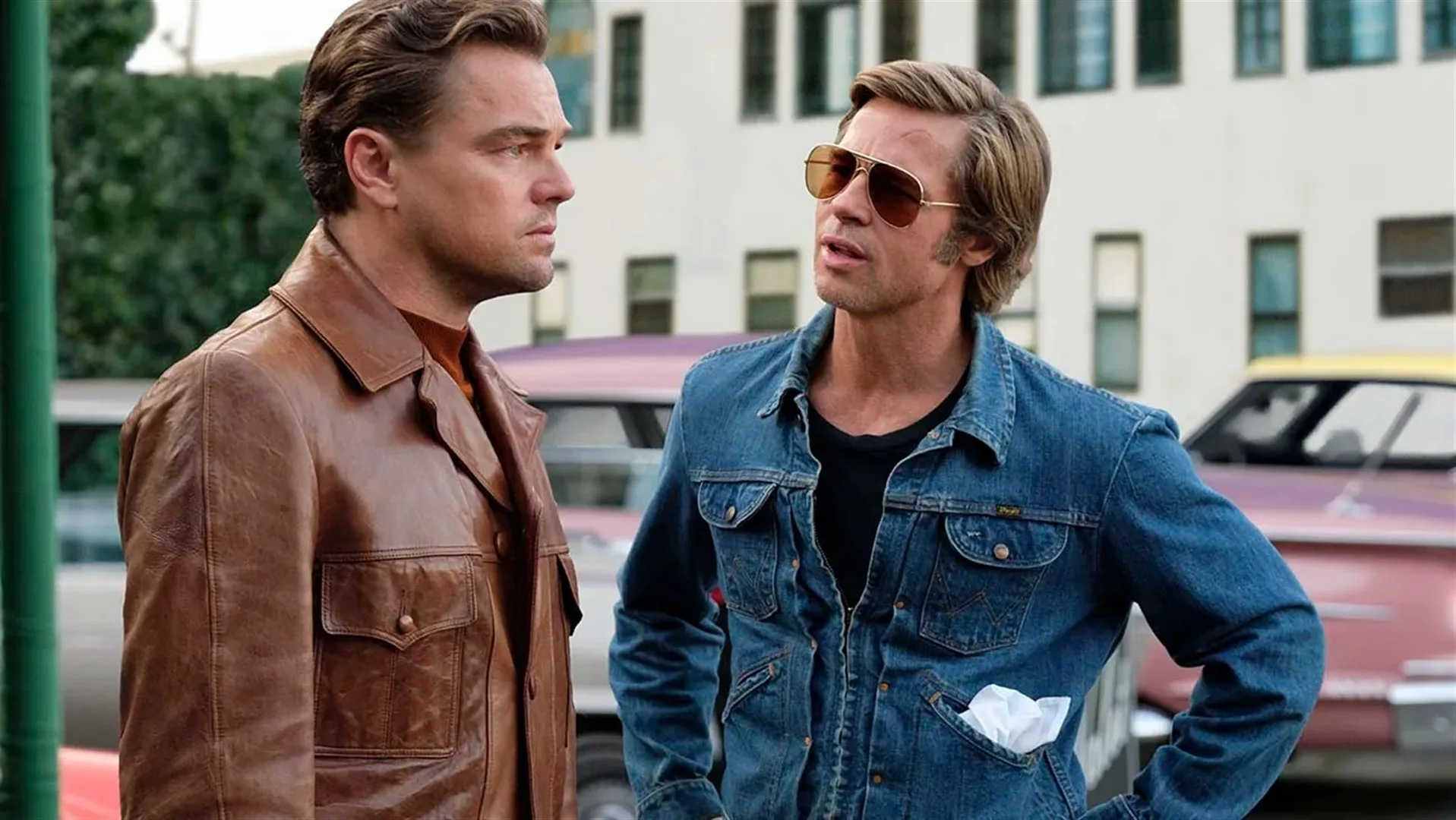
Led by the performances of its leading trio, Once Upon a Time… In Hollywood gives Tarantino and his performers a virtual playground to express reverence for a time of television production long forgotten. The film follows three main characters – aging TV star Rick Dalton (Leo DiCaprio), his stunt double Clint Booth (Brad Pitt), and Rick’s neighbor, the young Sharon Tate (Margot Robbie, who brings such beautiful expression to a wordless role) – on three different days in 1969. Faithfully recreating the iconography of the era, Once Upon a Time… In Hollywood allows these actors to live out Tarantino’s fantasy of Western anglo-saxon fantasies: the beautiful blonde actress, the gnarled and under appreciated workhorse – and in Booth, the film’s true star, the morally compromised man whose emotions and intentions are layered under a thick, leathered interiority.
Strangely enough, it’s also the least visually distinctive Tarantino film yet: as it revels in its themes and traditional masculinity, long segments of the film lack some of the iconic tracking shots and dolly work we expect from the most influential filmmaker of the Gen X era. What it makes for is a much looser, often inert film than one would expect: Tarantino clearly loves the 1969 Hollywood setting the film’s set in, but his reconstruction of the world feels more palatably superficial than it should be, in its attempts to simplify (and deify) the socio-economic dynamics of a complicated time.
It is also the whitest cast Tarantino’s ever employed, which creates a strange portrayal of a white-washed fantasy, idolizing a world where television Westerns still employed horrible racial stereotypes – it’s telling the most repeated, hated word in the film is “hippies,” leading to the kind of regressive deification of Clint Eastwood-types so much of the entertainment’s era is dedicated to. In reality, the only females given voices (outside of a young, intelligent child performer Rick meets) are either members of a cult, foreigners, or the almost wordless Sharon Tate, whose character is more a beautifully-performed fantasy of easy celebrity, than it is a dynamic portrayal of a an actress, expecting mother, and wife, the link between Tarantino’s vintage film world, and the progressive world of hippies the movie so virulently despises.
All that considered, Once Upon a Time… In Hollywood is a delight to watch, a mix of styles, points of view, and the wandering whims of Tarantino’s script, which ranges from historical recreation to absurd fantasy (a borderline problematic sequence featuring Bruce Lee highlighting the latter), to another take on alternative histories, ala Inglorious Bastards and Django Unchained. It is simply intoxicating filmmaking, neither pretentious in its construction, nor pedantic in its delivery: Tarantino clearly loves the material he’s riffing on here, and the passion shows.
Tarantino’s reverence for the film industry, and its history, is a story told across all of his films; in Once Upon a Time… in Hollywood, however, there’s a certain amount of bite missing to the story, never able to achieve the enigmatic heights of Pulp Fiction’s best moments (or any of Jackie Brown, which I’d argue is his greatest achievement in film, and by a long shot). The “passion” part of passion project takes on an entirely different air in the context of this film – and I’m not just talking about the gratuitous shots of female feet Tarantino once again subjects his audience to.
Thin but not hollow, thoughtful but not revelatory, Once Upon a Time… in Hollywood is a fascinating, wandering study of Tarantino’s reverence for pop culture, and of the ephemeral qualities we give our cinematic idols. Even though it doesn’t necessarily deconstruct these romanticized ideals in interesting ways, is able to work as a kind of stream of consciousness piece (even when it unexpectedly explodes into some expected Tarantino-style violence in the third act), a meandering, imperfect spectacle of a bygone era.