
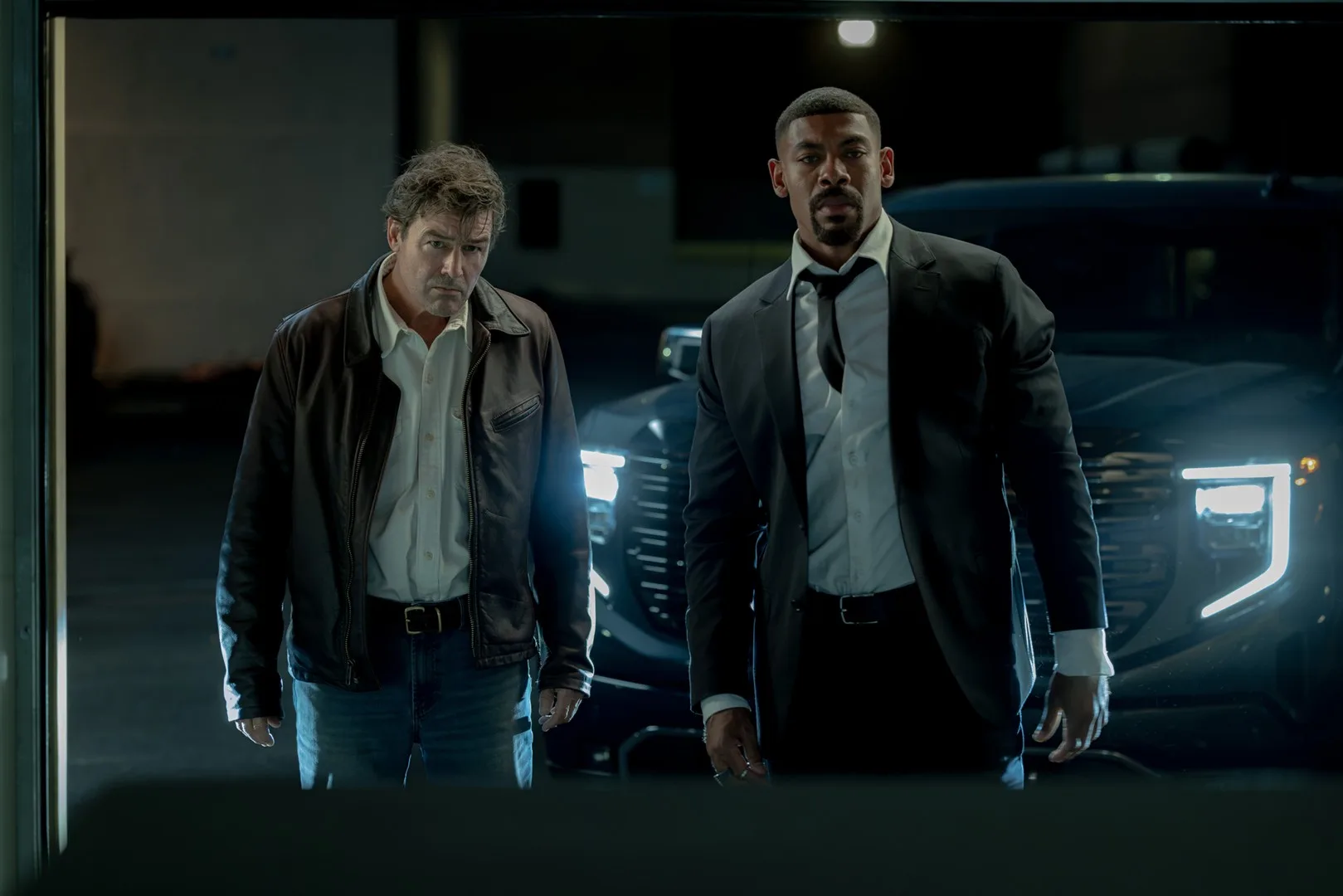
It’s all baseball and dads on “The Jordan Boys’ Legacy”, Lanterns‘ most obstinate, personal episode yet – and also its quietest, an hour that doesn’t pull any punches despite its distinct lack of fisticuffs and explicit action. Written by Damon Lindelof and Tom King, “The Jordan Boys’ Legacy” is a predictably reflective penultimate episode; thankfully, it’s a rather effective one, though it leans a bit heavily on simple metaphors to drive home its story of fathers, sons, and legacies – and like all Lindelof series, continues to pile on plot wrinkles even as it withholds nearly all of its narrative and thematic cards for the final hour.
“The Jordan Boys’ Legacy” begins in 1975, after Hal gets beat up by his own baseball teammates for refusing to give up the ball when he’s being replaced by another pitcher. And for the entire hour, Lanterns anchors itself to the image of Hal holding onto that baseball; an obvious parallel to the ring he refuses to give up later in life, but also an effective bit of metaphor about life, home, and the collective traumas that eventually drove Hal to his proverbial “fall” after the events of Rushville in 2016. It’s a bit on the nose, sure, but there’s a reason Lanterns marries the image of Hal clinging onto his dirty baseball to his inability to accept John as his successor. It’s not only a very obvious metaphor for Hal’s unrelenting sense of confidence and control, but also for the collective scars, traumas, and failures Hal collects over the course of his life, the dirt and dents held together by the baseball’s laces (themselves a never-ending, 108-stitch loop) that both young and old Hal can’t let go of.
From there, “The Jordan Boys’ Legacy” follows an increasingly anxious, desperate John as he tries to solve Hal’s murder, accompanied only by his thoughts and the Hal-ogram – who, importantly, is from 2006, before Hal’s life began to come apart at the seams. It’s here where Lanterns‘ penultimate episode shines the most, drawing great contrast from the bitter, almost defeated Hal of the 2010s with the more purposeful, optimistic version of him from 2006, one who openly compliments John’s ability to maintain constructs without a ring on, and generally seems bewildered and disappointed by the man he turned into following the fall of his mentor and the dissolution of trust between him and the Guardians (the events of Rushville obviously not helping with his mental state or sense of self-worth, of course). In particular, Kyle Chandler, Aaron Pierre, and Kelly Macdonald are all phenomenal in the scene inside her son Noah’s school (more on him in a minute): Kerry’s emotional reaction to meeting Hal-ogram is hauntingly powerful, revealing just how much Hal trusted and loved her – enough to talk about his father, the litmus test Hal-ogram puts to Kerry to see just how much his future self trusted her.
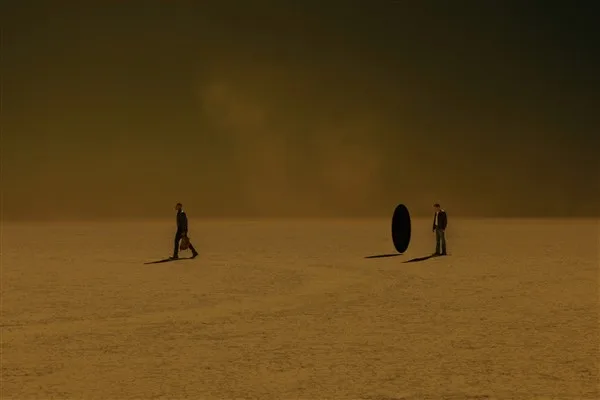
As a mood piece, the first 30 or so minutes of “The Jordan Boys’ Legacy” is among the most poignant of the series; where it frays at the edges ever so slightly is when it moves back to the inscrutable present of Lanterns, where the episode gets bogged down a bit in its spiritual journey, after Hal-ogram leads John through a portal (one hidden in the safe John found last episode) and guides him through a barren, broken world, one literally infected with fear – and housing the escaped Sinestro, who is revealed in the episode’s final seconds. As is any Lindelof series, Lanterns can get maddeningly focused on the journey, sometimes at the expense of its destination (The Leftovers notwithstanding, given it is one of the great TV endings of all time); Lindelof shines in using mystery boxes as prisms of reflection, so much so that the allegorical images and allusive, compounding mysteries become a bit impenetrable, and unnecessarily convoluted (see: the second half of Watchmen, which is both brilliant and maddening in its narrative acceleration in the third act). He avoids much of that with Lanterns, though the pacing and reveal of the final hour could potentially taint the emotional, metaphysical journey that Lindelof and King put John on in the back half of “The Jordan Boys’ Legacy”.
I also, admittedly, find myself a bit disappointed by the ultimate reveal, that the Jordan family is defined by their intergenerational depression. Thankfully, it avoids becoming therapy theater, but as Hal-ogram contends with his darkest truth (which, in its way, is a very compressed version of Tony Soprano’s own arc through his family history in The Sopranos‘ early seasons), it does feel a bit like Lanterns pulling the veil back a bit too far, letting its authorial voice leaking out a bit in a way that feels a bit hand-holdy. It would’ve been just as easy for Hal’s father to express this to him, or for Hal-ogram to remember images of Hal’s childhood to put these pieces together; having Hal explain it as he realizes it, undercuts the episode’s religious connotations a bit (notice the mention of John 16:13 during their car ride, a Biblical reference that discusses a spiritual journey guided by truth), and makes it all feel a bit overt in ways that so much of the series has avoided in other moments.
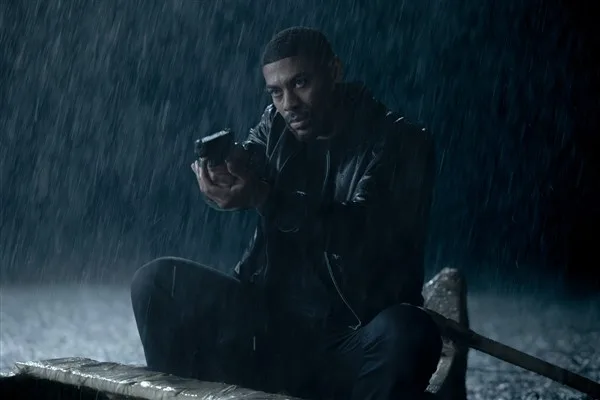
It doesn’t ruin the episode, of course – it’s still a palpable moment, and it makes sense the journeys of Hal and John would find resonance in the dynamic between son and father, defining itself by the traumatic bonds that may or may not be written in our genetic code, but nonetheless inform and shape the next generation, often without father or son being completely aware of it. It’s a very singular, focused message, but one that speaks to the series’ insistence that traumas large and small can be inherited – and only those with a strong enough force of will (a superhuman force of identity, one might say) can we overcome them. Throughout “The Jordan Boys’ Legacy”, this is something we’re still seeing John struggle with – and it gives the episode a strong, if muted, emotional anchor, as he scrambles to find the truth, pay off an annoyed waitress, and avoid experiencing the same existential fall from grace that defined the last decade of Hal’s life.
The only question that remains is: does Lanterns have enough time? In one episode, can it bring together the stories of the Macon, Jordan, and Stewart families, marrying their search for purpose and vengeance to the larger DC Universe, in ways that are both narratively and emotionally satisfying? Forget how they manage to squeeze this into the DC timeline so John Stewart can appear logically in Man of Tomorrow alongside Guy Gardner, but can Lanterns stick the landing on both John and Hal’s journeys of self-discovery, as Sinestro finally steps forward and the show’s endgame comes to bear? The answers lie within next week’s “Dirt and Stars” – regardless of the outcome, at least “The Jordan Boys’ Legacy” ensures Lanterns is heading into its finale on solid thematic and emotional ground. Now, all that’s left is for Lanterns to take the biggest creative swing of its run, and bring its story of baseball, life, and legacy home.
Other thoughts/observations:
- Mogo reference! Yes, it is an entire planet that is also a Lantern.
- John interrupts Hal-ogram multiple times with lyrics from OutKast’s “SpottieOttieDopaliscious”.
- We get a reference to Ferris Aircraft – a business run by Hal’s ex-girlfriend, a company that also appears to be referenced in the upcoming Clayface film.
- the exact text of John 16:13: “But when he, the Spirit of truth, comes, he will guide you into all the truth. He will not speak on his own; he will speak only what he hears, and he will tell you what is yet to come.”
- Yeah, Noah Macon is up to something weird at the football game in the finale. Is he a Manhunter? Did he kill Hal? I have no idea, but that kid’s fucking weird!
- Einstein-Rosen bridges get mentioned, the first technological crossover between the DCU and MCU I can remember.
- John describes the vision Antaan shared with him, of a civilization turned upon itself and eradicated through the use of fear gas. Sounds terrible!
- “I’m not fearless because I’m brave, I’m fearless because I’m broken.” Stop explaining everything!