
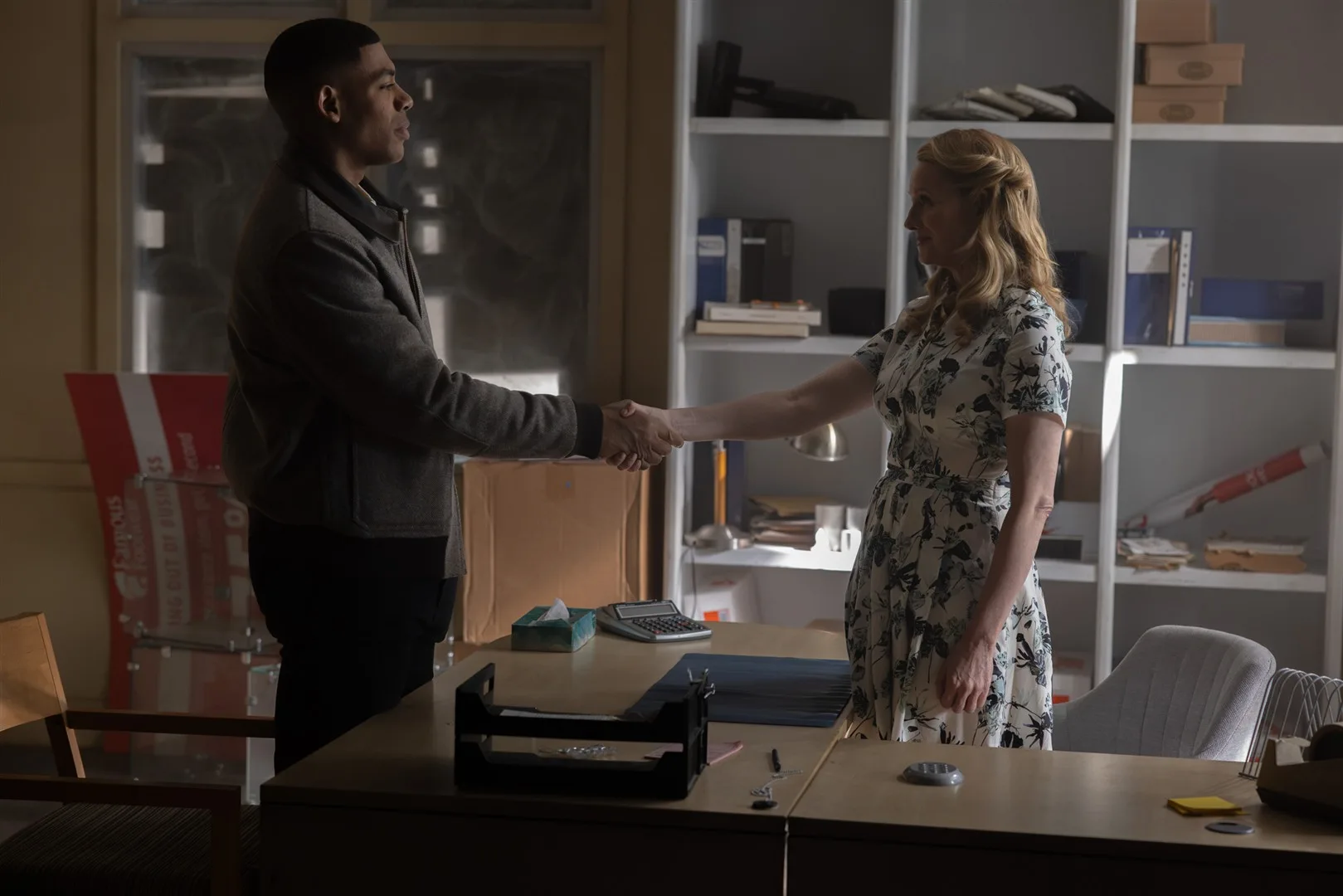
“OutKast” is Lanterns‘ (now-obligatory, in the post-Golden Age era) flashback episode, telling the story of John Stewart’s upbringing through three very specific lenses; his childhood, the failed mission that led to his discharge from the military – and, the framing device of “OutKast”, his interview with the Guardians of the Universe that set him on his current path with Hal Jordan. At times incredibly focused and effective – and at other times, languid and preachy – “OutKast” is certainly an intriguing first layer to the psychological onion of Stewart’s mind; however, repetitive narrative beats and an underwhelming presentation prevent Lanterns‘ third episode from peeling that layer back in more interesting, consequential ways.
“OutKast” is about two parallel ideas; the anxiety and stress that comes with the pursuit of excellence (and specifically, Black excellence), and one of Lindelof’s favorite themes, agency vs. destiny. At the former, “OutKast” is Lanterns at its most awkward, framing John Stewart’s upbringing around his parent’s presumed emotional sacrifice in raising John to have the opportunity his father never did (or more accurately, failed to meet the moment of, as we see in the episode’s earliest flashback). It’s a strong framing device, centering John’s struggle for upward mobility (both in and out of Earth’s atmosphere) around the Black experience, especially as John’s father watches Hal Jordan easily take up the Green Lantern helm.
And it makes for an interesting, unexpected shift, somewhat redeeming John’s father after his disappointment tips into depression following his rejection from the Lanterns. Unfortunately, how that motivates John’s mother is not as effective; though watching her take “raising a strong young man” to some uncomfortable places informs our understanding how John came to be, Lanterns becomes a lot less subtle when it shifts its attention to her presence in John’s upbringing, both with her character’s actions and monologues (the one time where Lanterns becomes genuinely preachy in a way that breaks the fourth wall between writer and audience noticeably).
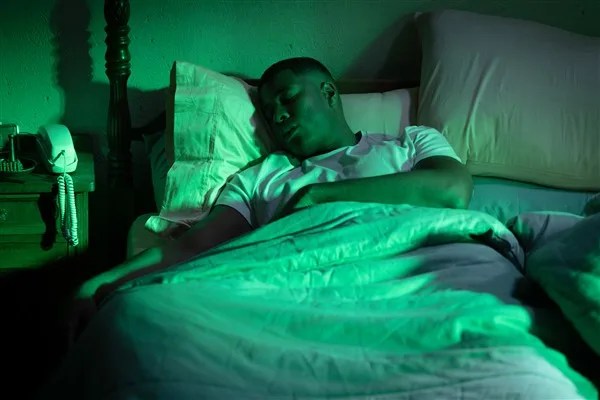
Unsubtlety of delivery aside, “OutKast” is strongest when it is focused on John’s perception of the world around him, on watching a man take in everything, process it internally, and only let a fraction of what’s inside slip out. The quietest moments are the most fascinating; when he’s listening to the Guardian (hey, Laura Linney!) or sitting quietly watching his mission blow up (literally) in his face, “OutKast” benefits greatly from what Aaron Pierre brings underneath John’s stoicism – behavior that is informed by his mother’s lessons, but isn’t shouted to us from the rooftops through the script, allowing Lanterns the space for reflection and inference that make these stories of identity and faith so much stronger.
Largely though, “OutKast” feels kind of unnecessary; while it’s nice to see some texture added to Stewart’s background, how the show is delivering Jordan’s backstory is proving that it doesn’t need an entire flashback episode to fill out one character’s backstory (Jordan’s only scene in the episode, the final one, adds nothing we already don’t know about him or his relationship to Stewart, either… so why have it?). Half of the beats in “OutKast” have been delivered in the first two episodes, and there’s obviously plenty of room in the next six to give voice to the others; there’s really never a point in “OutKast” where the episode feels like it’s providing the why of its presence, except for the scenes where John’s mother explains to her son (and the audience, as it feels in moments) about the extraordinary steps all people of color have had to go through, all throughout history, just to be seen and accepted as normal.
(I also wish this episode was a bit stronger with John’s father; after his presence in “Pilot” was so foreboding about his son’s upbringing, his presence is much softer and undefined in “OutKast”, which unintentionally minimizes his presence in the story a bit. Contrasting his father’s fears with his son’s lack of them, the latter of which is mostly talked about and not shown outside of the apple shooting sequences, would’ve helped add some depth here).

It also feels a bit like Lanterns soft-tossing the most interesting existential idea of its story; how one interprets the concept of destiny, and how those paths are formed throughout our formative years. This has been broached with just about every character (even John’s married sex buddy) – and when taken into consideration with what this episode has to say about race, one would think this would be naturally applied in the narrative of the episode. And yet, concepts of destiny are mostly left on the sidelines; there’s a small subplot of John having a fleeting interest in art, but that ultimately exists more to serve as a backdrop for his ability to build constructs with the ring, than it is a reflection on a character deciding to choose who they want to be, rather than what their family or environment have dictated to him since birth.
Regardless of approach, it didn’t need to take 52 whole minutes to get to the final scene, which is the biggest argument against what “OutKast” presents. A byproduct of the Golden Age of the early 2010s, the “flashback” episode is born out of the post-LOST movement for every show to give its character more definition through an extended look into their past (it’s also a low-key budgeting move that has become commonplace, as it cuts out most of the main and recurring cast and features one-off characters); at this point, it has become a trope unto itself – and one Lindelof and DC did better with Watchmen‘s “This Extraordinary Being” and “A God Walks Into Abar”, flashbacks that added real texture and depth with its glimpses into its own mythology. It’s what “OutKast” is going for, but lacks any sort of new wrinkle or development to give the entire exercise its poignancy; without it, “OutKast” is just a handful of cool moments tethered together by knowledge we already have, inexorably reducing the emotional impact it ultimately has by the time it reaches its conclusion.
Other thoughts/observations:
- The Guardian giving John’s mother a massive diamond for the “trauma and distress” they faced is a great touch; even aliens can’t do reparations correctly.
- “It’s human. We love the people who raise us, even if they’re crazy.” Part of the reason “OutKast” struggles is that it posits this fascinating idea through John, and then kind of just lets it linger – we never really understand the love John feels for his parents, because it is only shown to us in moments of conflict.
- John is seen talking to a bird near the end… doesn’t really quite explain the bird construct from “Trust Fall”, but it helps?
- The distinction between being programmed and being raised; if there is one sentence in Lanterns addressing the age of artificial intelligence we are entering against our will, it’s that one right there.
- John becoming a vegetarian because he was awarded cheeseburgers for getting apples shot off his head is a few degrees too clever for its own good.
- … why wasn’t John allowed to listen to contemporary music? Especially when part of how they trained him was by dropping him off in the hood on a regular basis?