
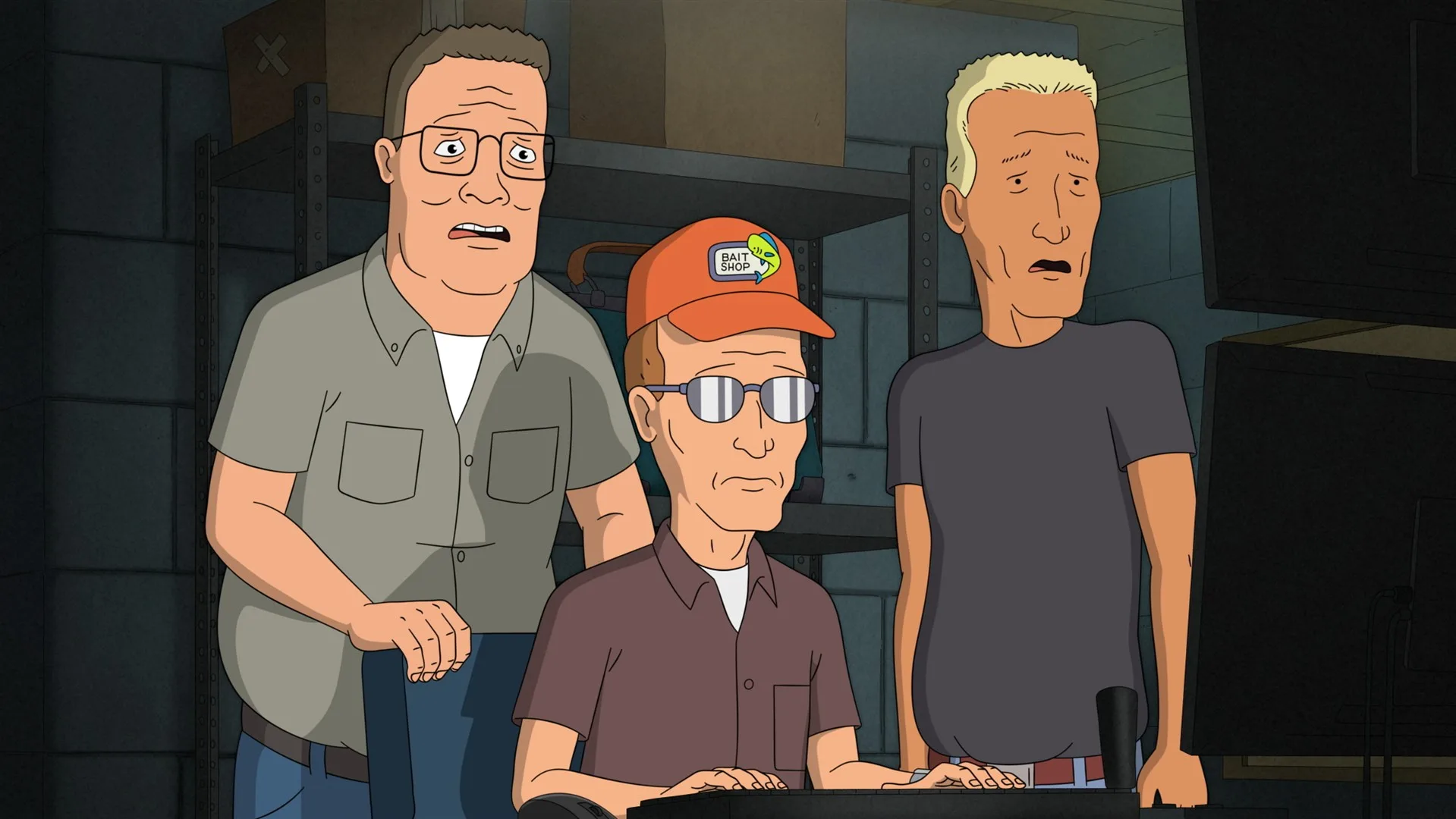
When King of the Hill returned after a 15 year absence (technically sixteen, as I don’t consider the four episodes that debuted in syndication in 2010 to count), it found itself trying to reverse engineer itself to fit the modern television landscape and somehow repair the fractured American sociopolitical psyche at the same time. The mix was an occasionally awkward, often heartwarming revival, one that was able to channel nostalgic goodwill into something a little different across a ten episode season 14 – and while some of its changes and new elements didn’t quite work, the result was, as a whole, a resounding success, a blueprint that so many unnecessary, unfortunate revivals, retreads, and reboots often lose as they try to justify their presence. Only those truly willing to accept and step into the changes around them have succeeded (I still contend King of the Hill and Rocko’s Modern Life: Static Cling are the best of the animated revivals, alongside the fifth season of Samurai Jack); though it required some growing pains from King of the Hill (especially as its cast significantly shifted and changed, often as a result of cast members passing away), season fourteen was ultimately a rousing success.
With those awkward transitions and abundant expositions (mostly) out of its way, King of the Hill‘s fifteenth season isn’t burdened with appealing to the audience to justify its purpose; instead, King of the Hill settles back into itself like a farmhouse after a thunderstorm – only this time, instead of its modernist tweaks and alterations upsetting its structure as it sinks back into old rhythms, season fifteen offers a much neater, softer integration of the modern world into the almost snow-globe like world of Arlen and its inhabitants.

Thanks to that easiness and confidence, King of the Hill‘s fifteen season is one of its most consistent since its return to basics initiative following the underwhelming fifth and sixth season of the series. With a heavier focus on the Hill family, King of the Hill pushes its central trio to look inward as they age into new challenges and personal conflicts, which only works to further enrichen the characters of Hank, Peggy, and Bobby – and in some of its best moments, works to continue building new wrinkles and complexities into the overlapping relationships between the Hill family members, in ways that keep their characters (who are as consistently predictable as ever, and I mean that in the best way possible) engaging and interesting, allowing the show’s thoughts on a myriad of relevant subjects, both political and personal, to surface naturally and unassumingly, striking an elegant balance between simplistic redneck comedy, traditionalist family sitcom, and a more careful, yet still hilarious take on baby boomers trying to exist in 2026.
That severe focus on the Hill family does come at a slight cost: if there’s one complaint to be had about King of the Hill, it’s that it is perhaps the one show on television where ten episodes just aren’t enough. Knowing its season order is brief, King of the Hill smartly bides its time by selecting one or two secondary characters to parallel alongside the main trio – but this approach has a pair of unintended, if entirely minor consequences, as it turns each episode into a glorified showcase for the proverbial flavor of the week character, and sometimes makes Arlen feel like less like a space Hank and Peggy occupy, and more like one they are heliocentric to. Whether it’s Kahn, Bill, or even Connie, it feels like King of the Hill explicitly pushes each secondary and tertiary character to the forefront once, offering nascent character development while it pushes through a couple overarching plot lines before putting them back on the shelf again until next season.

Some of this is undoubtably the result of budget and episode limitations; there’s certainly nothing wrong with the tone or dynamic at the heart of the series, which is as healthy and rejuvenated as a series could possibly be as it crosses the 260-episode mark. But there is a certain workmanlike approach to the season’s storytelling that, while it never becomes stale, becomes ever so slightly predictable; it’s not a season without its surprises and developments, but it feels like those are mostly kept to the periphery when it doesn’t involve Bobby or Peggy (Hank, as always, remains steadfastly rigid in his approach to the world, remaining the important foundational anchor to the show’s laid back, slightly neurotic soul).
This is a small complaint, of course: season fifteen is a remarkably enjoyable ten episode run, one that piggybacks off of season fourteen’s blend of old and new aesthetics, weaving an even tighter blend of comedy, low stakes melodrama, and pathos that deliver consistently; not only with some strong episodes, but some of my favorite moments in the entire series (including scenes at the end of episodes two and three that made the room around me suddenly and incredibly dusty). If anything, season fifteen of King of the Hill is so comfortably good it begs for more than ten episodes, to allow its expanded emotional palette to extend a bit further into some of the more static secondary characters in the series (Bill and Boomhauer being the two best examples). That’s the biggest complaint I can find with King of the Hill‘s fifteenth season, ten episodes that further cement its legacy as one of the best animated shows of all-time – and more importantly, a distinctly memorable, singular reflection on Americana that’s still running strong nearly 270 episodes in.