Though it was riding a wave of critical acclaim through the first decade of the 21st century, with titles like Fallout 3, its spinoff Fallout: New Vegas, and 2011’s The Elder Scrolls V: Skyrim, Bethesda Softworks’ reputation as a developer was in a precarious place heading into the 2010s, especially after the embarrassing debacle of Fallout 4’s release in 2015. Though they were holding onto their reputation as a publisher, with well-regarded reboots of Doom and Wolfenstein (by idSoftware) and new IP like Dishonored (from Arkane Studios), it seemed the audience’s patience with their bug-laden adventures had run out – and if hadn’t, the one-two punch of Fallout 76 and Elder Scrolls: Blades, with their broken systems and microtransactions, seemed to kill what goodwill was left.
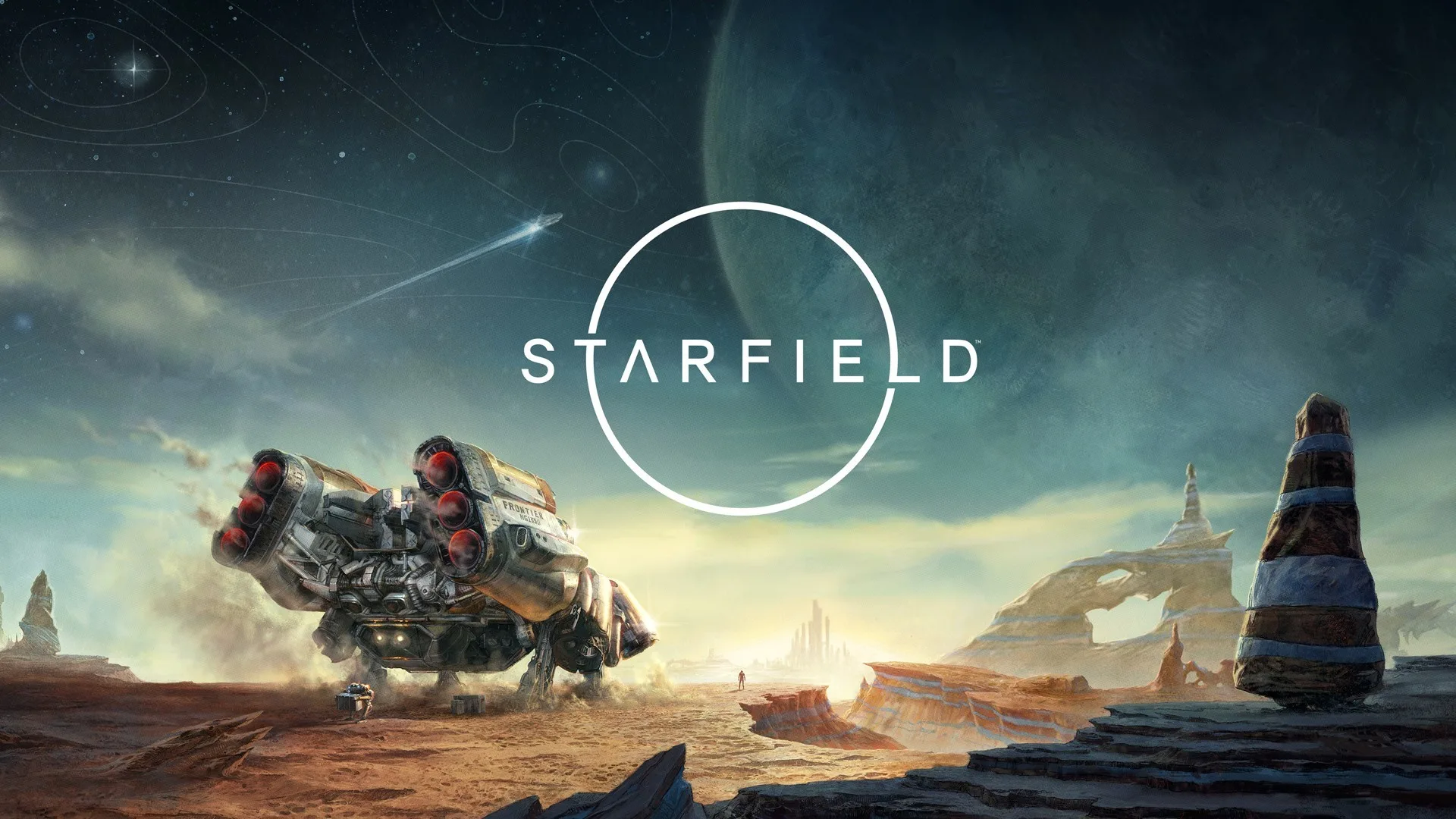
Given that history, it’s no surprise Bethesda hasn’t developed a game since 2017, instead focusing their development team’s full attention on the studio’s next game (and its first new IP in 25 years), known to the public as Starfield. After seven years in development (and one major acquisition, with Bethesda’s parent company ZeniMax now owned by Microsoft), Starfield finally released on PC and Xbox in September, a lumbering, massive role-playing game that feels excited for the future, but also bound to the past in some very specific, frustrating ways.
Starfield is part No Man’s Sky and part Fallout; that is, it is a single-player action RPG set in space, where players explore planets and kill pirates, set in a world of warring factions… and in a strange twist for a Bethesda game, a galaxy of hope, a world whose grime and resilience is undoubtedly more optimistic than suffocating. After your created character touches a particularly unique space rock, Starfield sets players off on an adventure of exploration, gunplay and political intrigue, all delivered with the familiar Fallout and Skyrim trappings of dialogue choices, pickpocketing, and shooting.
Like with any mainline Bethesda game, the checklist of features and systems in Starfield is impressive; they’ve been putting The Creation Engine (the proprietary engine they build their game systems on) through its paces for over a decade now, and that knowledge shows. From base and shipbuilding mechanics to research activities – and you know, gunplay and full-fledged space combat – Starfield is rich in items and systems to help players build out an inhabited world and character; in that sense, Starfield remembers role-playing is about more than seeing numbers get larger (in fact, the game’s lack of level cap seems to encourage players to think less about stats, and more about building an experience), and gives players the room to build out their own identities in its world of 1000+ planets, multiple warring factions, and wonderfully dense lore about what brings humans from the 21st century into the 24th.
After the game’s opening hours – which are among some of the most wondrous, bombastic sequences I’ve seen from Bethesda – players are dropped into Starfield’s many competing stories and activities, and given the freedom to shoot, loot, and conversate at their heart’s desire. While that freedom is always welcome in their game, Starfield’s embrace of this quickly begins to work against itself, as players embark on a journey that quickly begins to feel really familiar to the others that came before it.
From loading screens to inventory management, from awkward character animations to the actual mechanics of traveling between planets (which is 95% fast traveling, a strange choice for a game set in space), there are so many parts of Starfield that feel like old Bethesda fare, albeit with a new coat of paint. A full quarter of the game is managing inventory between player, companion and ship, in a world littered full of thousands and thousands of useless items (do I need to open another dozen fridges with empty folders in them? I do not!); for anyone that’s spent dozens of hours in Fallout or Skyrim already, that proposition is not exactly an exciting one.
That familiarity bleeds through many of Starfield’s game systems once the fresh coat of space paint wears off; right down to a narrative of warring factions over misunderstood technology, Starfield lays bare the limitations of Bethesda currently as a studio, using a system like The Creation Engine. It makes everything feel just a little looser and underdeveloped than it should; jumping and boosting around the surface of different planets is cool and all (the gravity physics in the game are impressive), but when it takes hours to travel between three pointless activity markers on a distant moon, one can see engine and gameplay loop starting to rip at the seams.
Thankfully, Starfield runs and plays better than most of Bethesda’s recent fare have in its launch period; save for one broken side mission, the usual busted physics, erroneous animations, and huge game-breaking bugs aren’t apparent in Starfield. Which is a shame; the game’s polish seems to come at the cost of a bit of its depth, or its willingness to explore and expand on the systems it has employed for so many years (the base building in Fallout 4 blows Starfield out of the water, for example, as does the weapon modification system). It is a beautiful, relatively smooth experience – but it is also an undeniably familiar and repetitive one, which holds it back from feeling like the fresh, new start Bethesda is certainly hoping for.
I’m about 50 hours into Starfield, and though I’ve enjoyed reading the incidental stories and odd characters scattered about the dozens of planets I’ve explored, there’s nothing about Starfield that feels particularly exciting, new… or really even essential. Especially with its core story; those who’ve played Bethesda games can feel the narrative tunneling in the game’s third act coming – even if its final twist is an interesting one that opens the avenues of what Starfield’s undetermined future could be (will Starfield be a live game? Have large DLCs? Both? It seems Bethesda doesn’t quite know yet).
That doesn’t mean it is a bad game – but it’s a game at war with its own past and future, too afraid of either to truly embark on a journey into the unknown. Of course, fans who know exactly what to expect will delight in the usual pleasures these games always promise their players, to inhabit a world of strange personalities and dozens of interlocking, quirky game systems (and subpar inventory management). But for anyone hoping it would be a stark departure from Bethesda’s recent past, Starfield is not going to endear them to the quirky, long-standing oddities of the developer’s recent past – which, in a game about looking to the stars, is a dissonance Starfield unfortunately never resolves.