
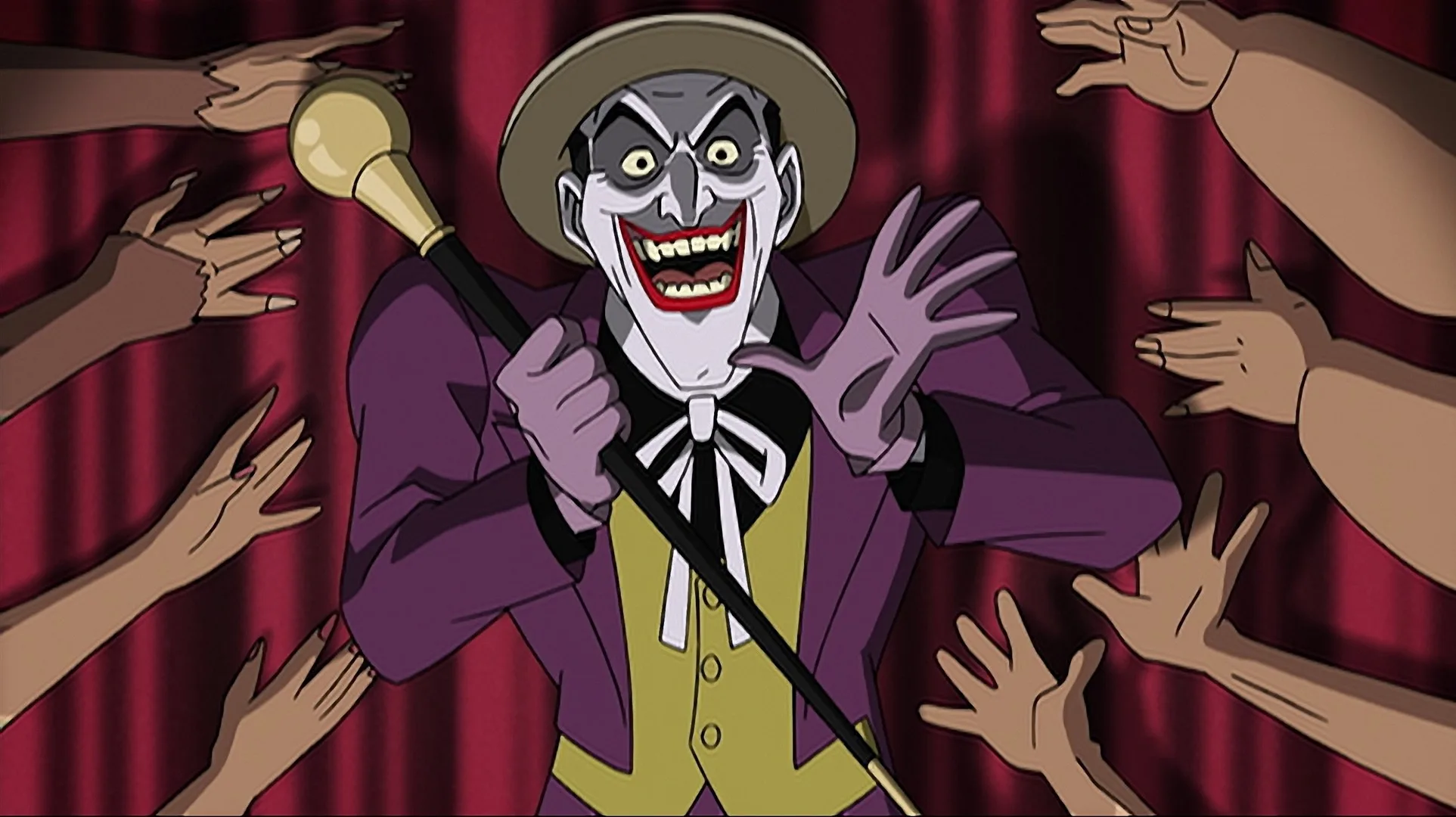
Alan Moore’s The Killing Joke graphic novel has an interesting legacy. Heralded by many Batman minds as one of The Great Batman Stories but written off by the writer himself, The Killing Joke stands as one remains one of the coldest, most macabre stories written about the Caped Crusader and the killer clown. Staged in a particularly dark, twisted Gotham, The Killing Joke sees the Joker testing his now-infamous “one bad day” theory on Commissoner Gordon. Can a man be driven insane in one day, The Killing Joke asks its characters and the audience, a question that leads the story into a fascinating meta-exploration of the cyclical relationship between superhero and supervillain.
However, how The Killing Joke arrives at its demented love triangle of sorts is one of the more appalling DC stories ever: to kick off his experiment on James Gordon, Joker attacks his daughter Barbara instead, paralyzing her with a gunshot wound, then taking photos of her naked body to later project in front of her father’s face. Her actual presence in the graphic novel consists of about four panels, only two of which see her in active movement (as she opens the door, to then be shot through the midsection by the Joker), the only moment of The Killing Joke to eventually become canonical to DC’s world.
Upon its original release, The Killing Joke was lauded as the greatest Batman story ever told, full of iconic moments later adapted in both Tim Burton and Christopher Nolan’s films, and referenced in every corner of the expanded DC universe. Over time, however, the book’s treatment of Barbara, along with the inexplicable weirdness of images like midget BDSM gimps and what attempts to be a sympathetic origin story for the Joker, has muddled its legacy a bit in literary cirtcles, though it remains as iconic as ever in the public eye. So iconic, in fact, that when an animated adaptation was announced in 2015, it brought Mark Hamill and Kevin Conroy back to the roles of Joker and Batman, arguably the two definitive voice actors for the central characters.
Of course, the press surrounding the announcement addressed the Barbara issue, promising her a bigger story line (The Killing Joke was a pretty short story, after all, taking place across a few evenings in Gotham) and offering her agency and presence she wasn’t offered in the graphic novel. Hype surrounded the first images of Batgirl (in her full Batgirl garb, something we never get to see in the comic) when the trailer was released earlier this year; under the guide of producer Bruce Timm (the heralded writer of the 1990’s animated series) and writer Brian Azzarello (currently penning Dark Knight III: The Master Race for DC Comics), could this new material bring some life – literally – to Barbara Gordon?
The answer is a resounding no; and in a way, the cinematic adaptation of The Killing Joke is worse off for its depiction of Barbara Gordon. Immediately introduced as a woman in over her head, chasing a night life of crime fighting because she likes the workout and is attracted to her instructor, the Barbara offered in Azzarello’s prequel is emptier than the character in Alan Moore’s novel; she spends the prequel chasing around a mobster who continuously sexually harasses her, only to be “saved” by Batman when she finally catches the guy and beats the hell out of him.
And then, she has sex with Batman.
When the footage of her steamy rooftop sequence with Batman was played at July’s San Diego Comic-Con, the panel devolved into nonsense, to the point Azzarello called someone in the audience a “pussy” regarding their comments on the scene. The audience outraged was more than justified, though: who along the way thought it was a good idea to do this, to either character? The Batman we see in the prologue is even colder and rigid than the Batman we all know and love: he spends his whole time sneering and yelling at Barbara, determining what’s best for her even as he refuses to provide actual guidance for her journey as his partner. And after she sleeps with Batman? She beats up said creepy mobster (who keeps telling her to smile, or informing her how “hot” she is) and then retires immediately from crimefighting, her two morally-compromising moments overwhelming her, and forcing her to return to her life as the girl who does something at the library, setting the stage for her unfortunate paralyzation ten minutes later.
DC’s attempts to Band-Aid The Killing Joke on video is an absolute failure, robbing Barbara of her deserved place in the lore, which renders her a plot device for Batman and the Joker to ultimately laugh over (sure, they aren’t laughing at her, but this doesn’t end with Bruce confronting Joker about what he did to Barbara in any way). Her trauma only serves to fuel the game being played by the Joker against Batman – which, it turns out, is not a very interesting story itself on film. Put into movement, The Killing Joke does nothing but offer straightforward presentations of the images in the graphic novel, which offer up a more modern-looking Gotham, but eschew exploring it in favor for long, repetitive sequences at the Joker’s carnival hideout, and lots and lots of time letting Hamill ham it up, in what will likely be his last go-round as the Joker.
In motion, the story of sexual assault, angel-winged gimps, and a man who just wanted to make some money for his pregnant wife is revealed to be as thin and weightless as some always thought it was. Barbara’s lack of a presence only amplifies the absolute absence of humanity in The Killing Joke: watching this story play out on screen, there’s no debate to be had about sanity, about motivation, or about the complicated tenets of justice, three important, foundational pillars of the Batman/Joker dynamic. Instead, the animated adaptation of The Killing Joke revels in the regressive, offering Barbara more space in the narrative, only to prove what little agency she has a character in this story (and considering how her paralyzation made its way into DC canon, much of her existence) she actually is.
The Killing Joke is certainly a story that has its moments; but contrary to what the story’s legacy has been for nearly thirty years, those moments are few and far in between. Thanks to the horribly poor, inflexible adaptation offered by the DC Animated Universe (easily one of the worst among the 26 films released in the past decade), that legacy only stands to be tarnished more, and rightfully so. In a way, this is the best thing that could’ve happened to The Killing Joke: now maybe we can finally move on, and see a new Batman/Joker story take its place.
(portions of this originally published in UpPortland Magazine)