
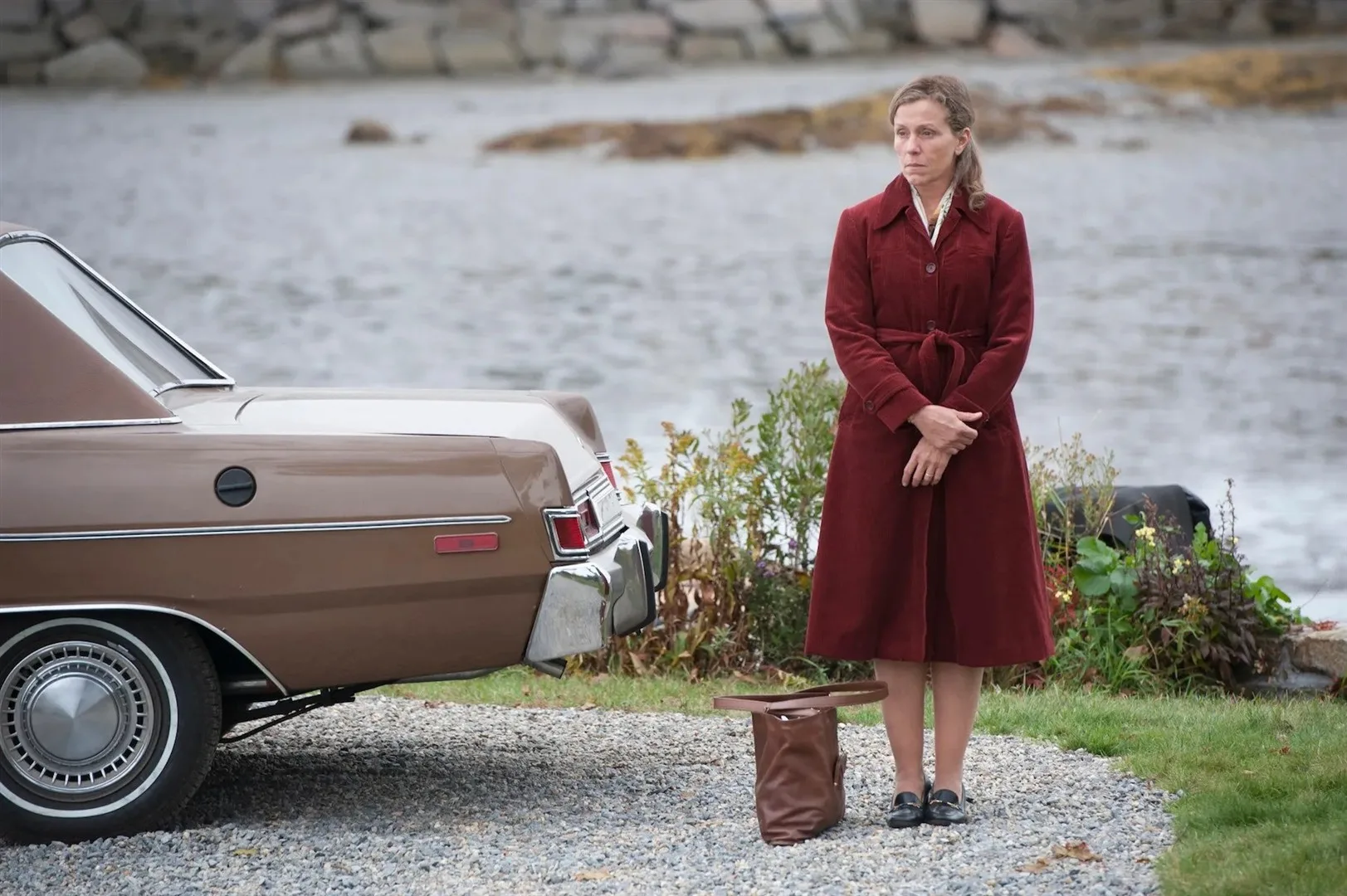
Great television can be hard to watch – at times, it can be the truest marker of a show’s quality, it’s ability to engage us on a subconscious level that makes us feel uncomfortable, challenging our preconceptions and beliefs, or simply presenting a reflection of ourselves we’re afraid to recognize. And this doesn’t apply to dark, cynical television shows like The Sopranos or Breaking Bad as many may think; it can be found in inspiring stories like Rectify or Enlightened just as easily. Olive Kitteridge, HBO’s adaptation of Elizabeth Strout’s award-winning collection of short stories, is a little bit of both – or rather, a lot of darkness with just enough light in the right places to be heartbreaking and cathartic at the same time.
Starring Frances McDormand as the titular character, Olive Kitteridge isn’t just the story of a cranky, old woman: it’s the story of a long, complicated marriage, between Olive and her polar opposite, her husband Henry (a wonderfully cast Richard Jenkins). Where she fills the world with cynicism and harsh reminders, he greets the world with a smile and open arms – she’s a math teacher and he’s the owner of the local pharmacy, if you need a little more overt symbolism for her rigidness and his kindness. Their marriage, told over four hours and spanning twenty five years, is like many others depicted on-screen, with peaks and valleys, failures (lots of them), successes, and tragedies (again, lots of them).
However, Olive Kitteridge understands one thing about marriage that most movies and television shows (and novels, for that matter) miss: that the feeling of regret all couples feel in each phase of adult life together is not always a bad thing. Sure, Olive’s behavior certainly leads to many of the karmic events in her life, but the last two parts of the series are beautiful, repeatedly poignant reminders about the value of regret, and how it can often inspire us to take stock of our lives and recognize the positive. It’s the couples who can do that in their most trying moments that stay together – and it’s that constant ebb and flow between Henry’s frustrations with his wife and Oliver’s secret regrets, that ultimately strengthens their marriage during a harrowing incident in “Different Road”, the third part of the mini-series.
And underneath it all, Olive Kitteridge is about depression, something many characters minor and major suffer with throughout the series. At times, it can make Kitteridge very, very tough to watch, watching characters struggle with this invisible affliction constantly popping up throughout their lives, which predominantly features traumatic death, numerous suicides, and many a ending that is less than happy. It’s the demon Olive can never seem to kick, and one that becomes a prism to view many characters in the series: it becomes a meter of character, watching one deal with a rattling moment, then bring themselves back from the brink of self-destruction, often numerous times over.
At the center of it, of course, is the marriage of Henry and Olive: and there are no two better actors than McDormand and Jenkins for the job, delivering powerful performances, Jenkins playing the subtler side to McDormand’s intense, endlessly layered performance as Olive, displaying her complexities and unspoken flaws with her ability to blend hilarious accents and comedic sensibilities, with a very physically-dramatic performance (think of her lumbering around as a pregnant woman in Fargo, only now the baby is the stress of life and aging). She dominates the screen – and in a cast featuring Jenkins, John Gallagher Jr., Zoe Kazan, Jesse Plemons, and a wonderful small role from Bill Murray (as a Republican-leaning widow, featured in tonight’s two hours), that’s no small accomplishment.
Heartbreaking, hilarious, ironic, and constantly poignant, Olive Kitteridge is a complicated show about complicated things, prone to stare at a family grieving just as long as it stares out the Kitteridge’s windows into the ocean, or examining the holes in Olive’s stocking feet when she returns from a trip to New York. A contemplative show that isn’t afraid to throw us in the deepest, darkest water it can, Olive Kitteridge is as dour and difficult to watch as anything I’ve seen in 2014 – and at the same time, the most engaging, emotionally rewarding experience I’ve had all year.